
The Hidden Helix: Our Signature Look
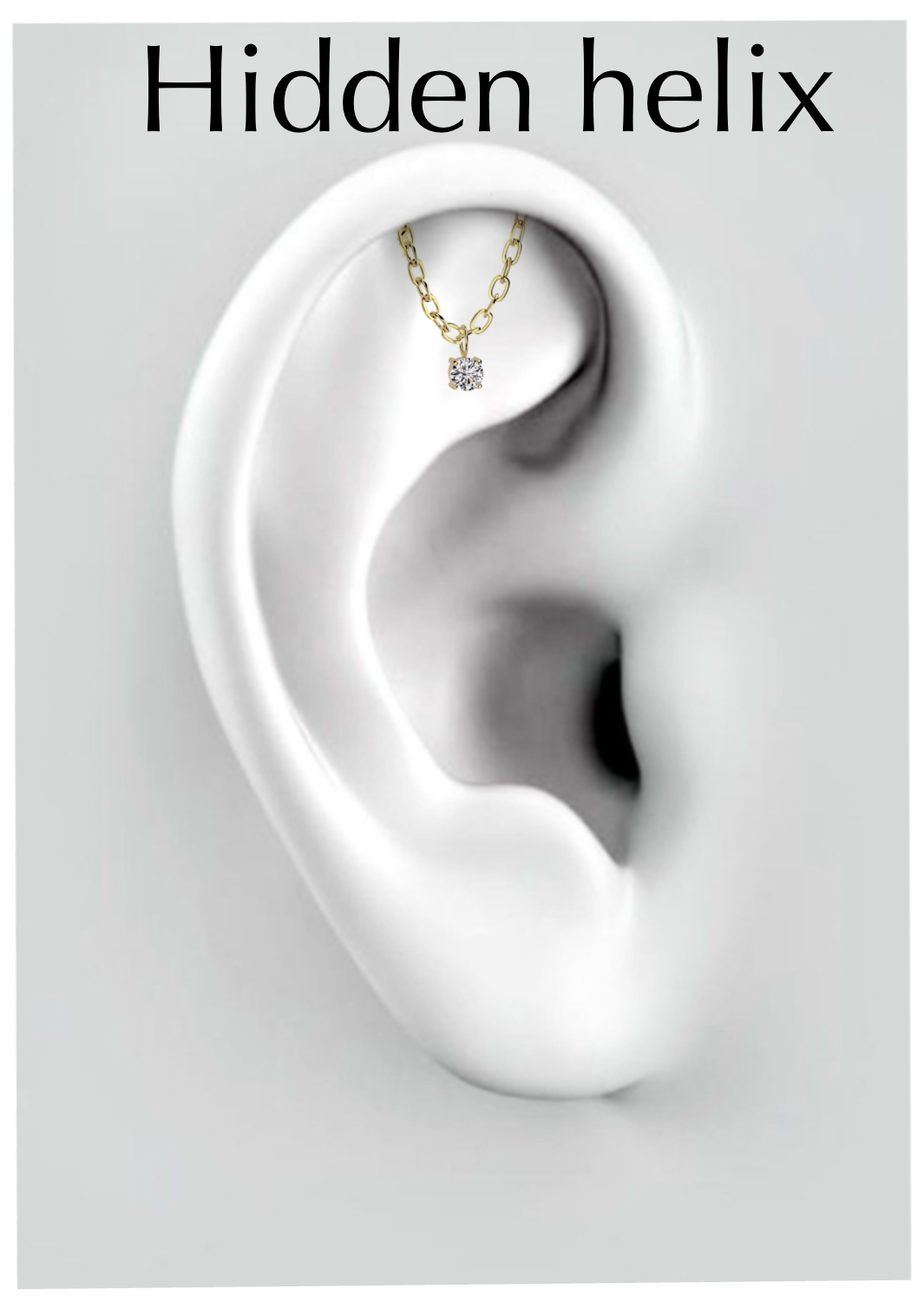
The hidden helix is a Piercings Works classic. While a standard helix sits on the outer curve of your ear shell, a hidden helix sits on the inner side of the helix rim. The jewellery is completely invisible from the front — only visible if someone looks at your ear from behind.
This is perfect if you want a discreet piercing in a professional workplace, or if you simply love subtle styling. The placement requires precision; not everyone has the right helix anatomy for it. That’s why we always perform a thorough anatomical assessment.
Hidden Rook & Faux Rook
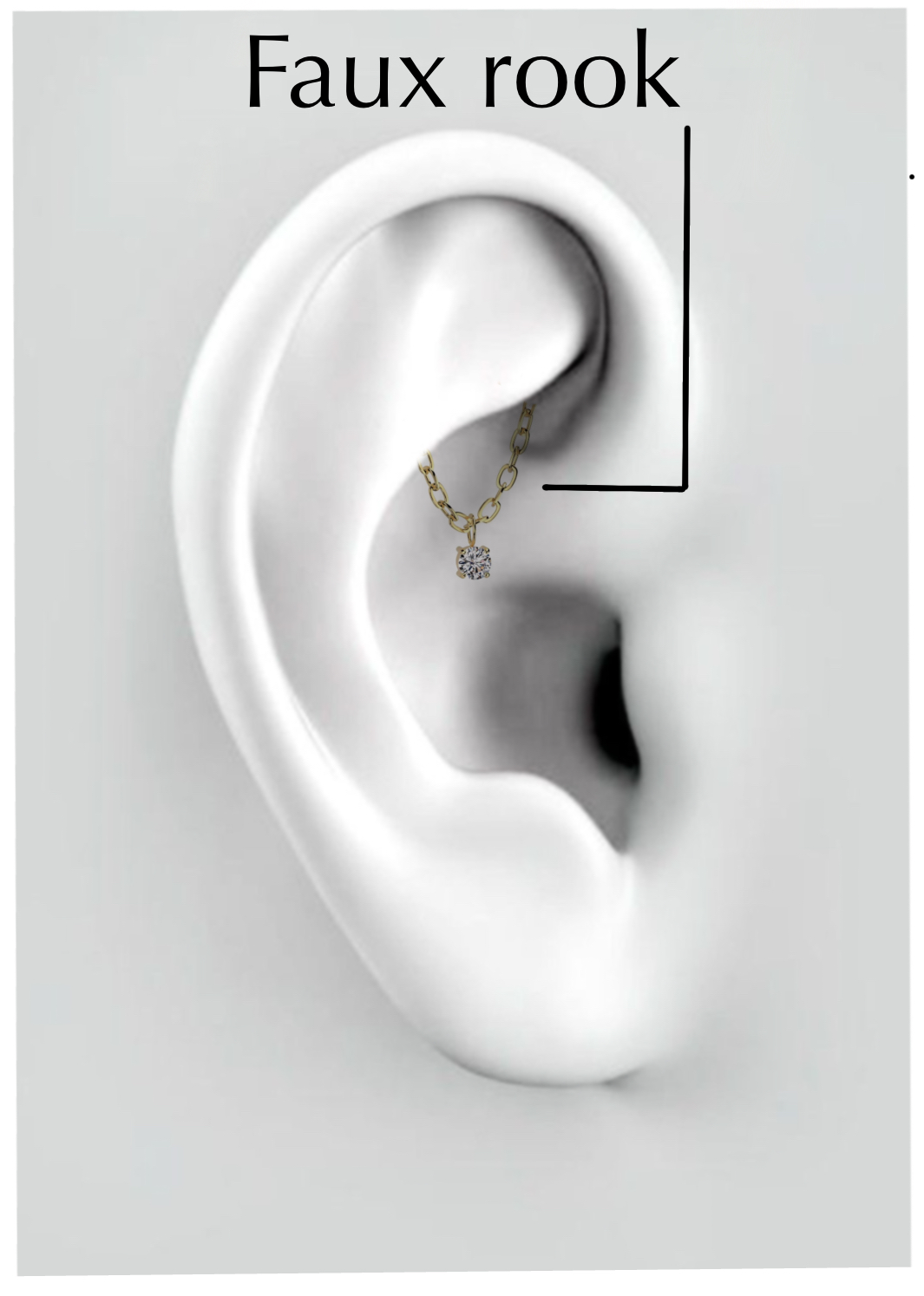
A true rook piercing goes through the small ridge above your anti-tragus — but it demands specific anatomy. The faux rook is the alternative: a single stud on the upper ridge that looks like a rook without the anatomical requirements.
The hidden rook is a subtler variant: same placement, but the jewellery tucks into the inner curve. Both heal in 6-12 months. Keeping pressure off it while you sleep is essential.
Hidden Conch
Your conch is the large, hollow-sounding cavity in the centre of your ear. A hidden conch piercing sits deeper inside this hollow, making it less visible. This piercing combines the best of both worlds: you can wear beautiful jewellery and keep it subtly tucked away.
Healing time: 6-12 months depending on the type (shallow or deeper).
Anti-Tragus & Anti-Tragus Variants
Your anti-tragus is the small cartilage ridge directly opposite your tragus. It’s cartilage, and not everyone has enough anatomical space. If you do, this piercing is understated but elegantly striking.
This isn’t for everyone — it’s entirely dependent on your ear anatomy. Our piercers always assess this honestly.
Vertical Tragus & Surface Tragus
A standard tragus piercing runs horizontally through your tragus. A vertical variant runs vertically across it, creating a more dramatic effect. The surface tragus variant — where the jewellery sits shallowly under the skin — carries higher rejection risk and requires surface jewellery.
Healing: 8-12 weeks for standard, 2-4 months for surface.
Vertical Industrial: The Advanced Edge
A traditional industrial barbell runs horizontally across your ear. A vertical industrial is a rare, advanced variant: a barbell running top to bottom, which is extremely striking. This demands perfect anatomy and significant expertise.
This is truly for the adventurous — trust your anatomy consultation.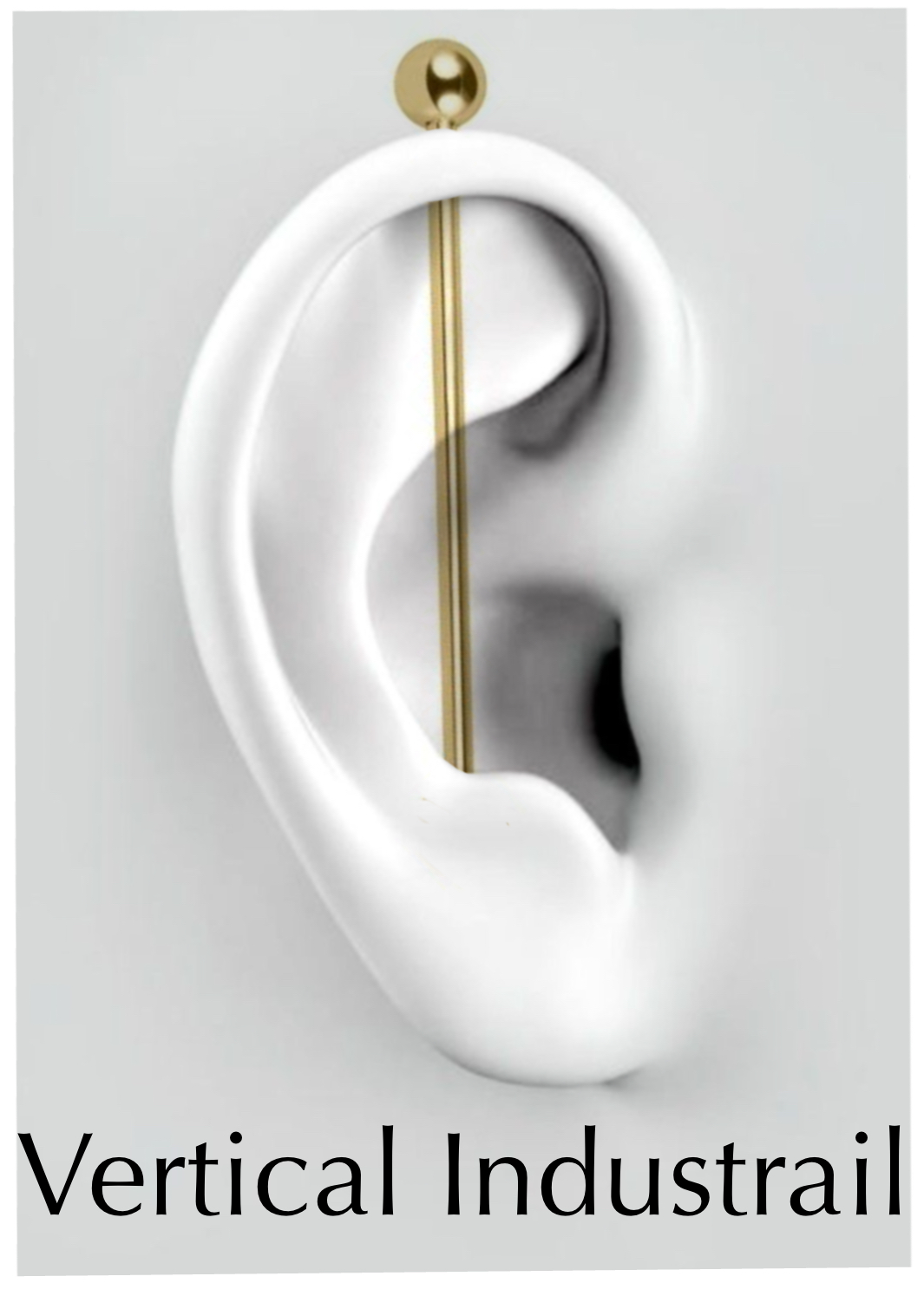
Flat Clusters & Constellation Piercings
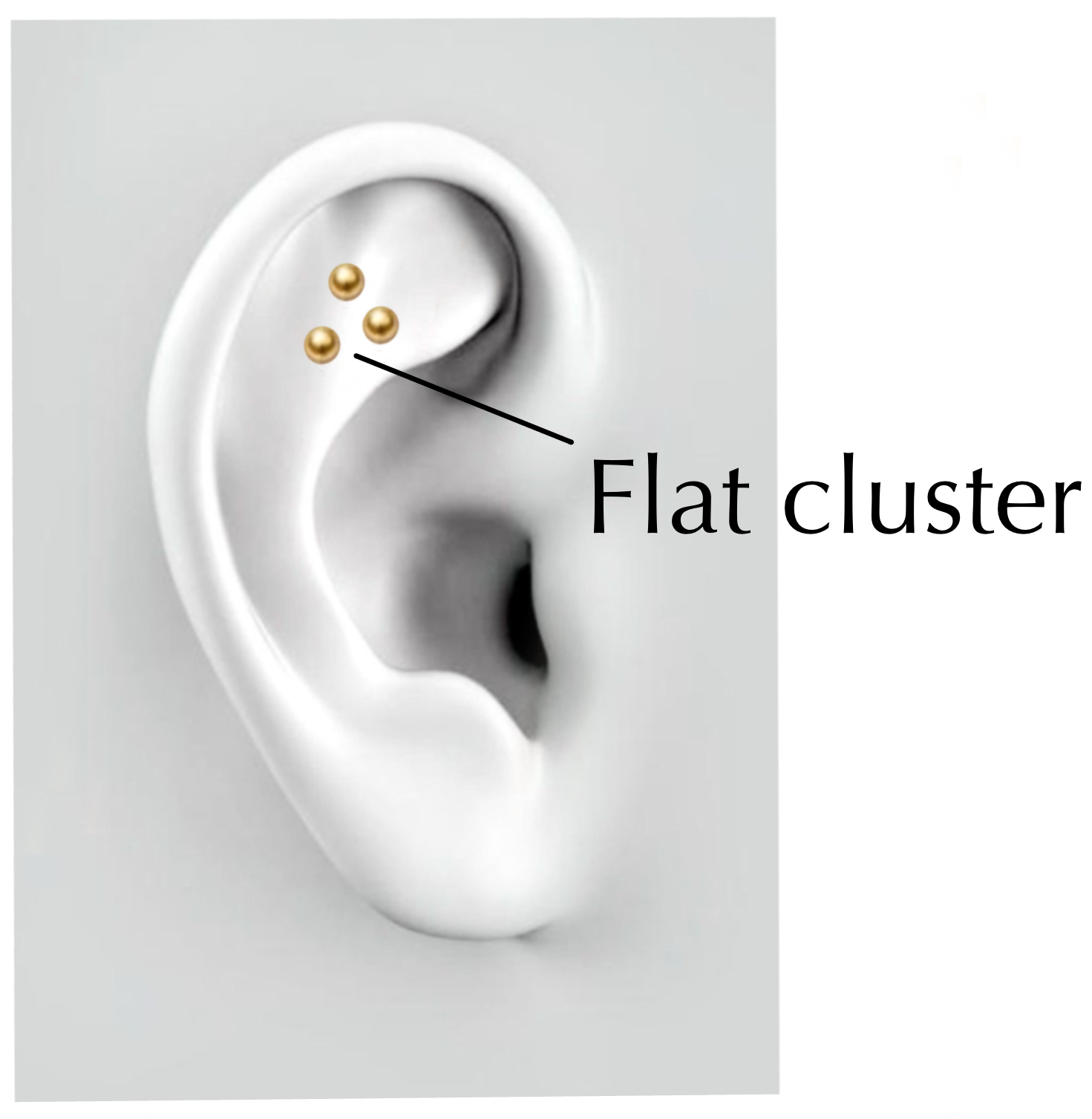
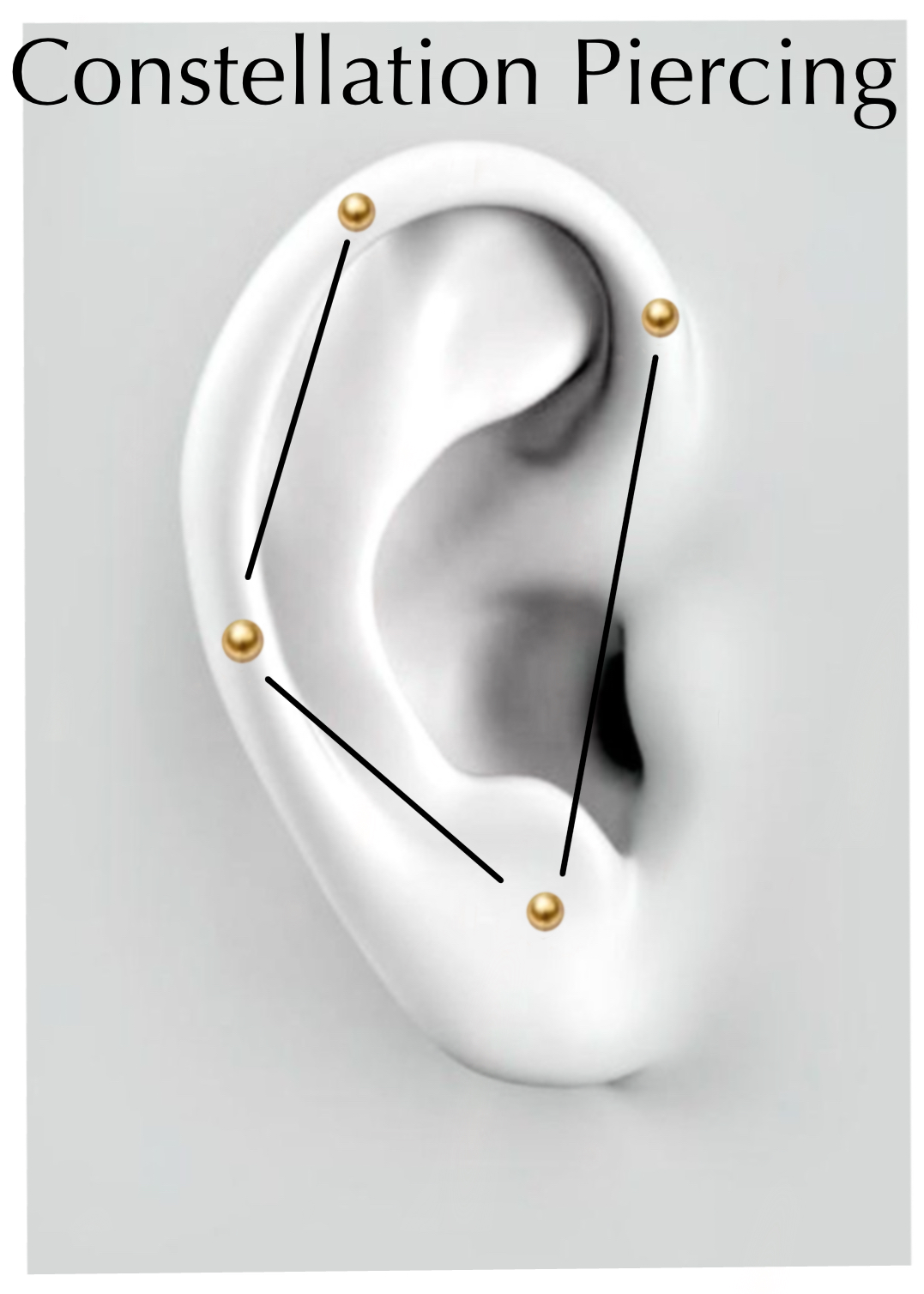
Picture your flat ear area dotted with a small cluster of delicate studs — each perfectly spaced, almost like stars mapping a constellation across your ear. This is earscaping: designing multiple piercings as one unified artwork.
You don’t have to do this all at once. Many clients build their constellation gradually, meaning you can see how each piece looks before adding more. Since cartilage heals in 6-12 months per piercing, you can work in phases.
Healing Guidelines for Advanced Ear Piercings
The basics: - Sleep on your other side until healed (at least 2-3 months) - Rinse with sterile saline twice daily — no more, overcleanin weakens the tissue - Protect your ear from bumps and pressure, especially in the first weeks - Wear implant-grade titanium for your initial jewellery
What to avoid: - Headphones, earbuds, or caps pressing on the area - Twisting or playing with the jewellery - Chlorine and saltwater for the first 4-6 weeks - Sleeping on the healing piercing
Risks & Honest Talk
Advanced cartilage piercings can develop infections if neglected. They can also migrate (slowly shift position) or reject, especially if you’re constantly irritating them. Faux rooks and flat clusters are generally lower-risk because they’re less demanding placements.
At Piercings Works, we’ll tell you straight: if your anatomy isn’t suitable, you won’t get a hidden helix or vertical industrial. And that’s okay.
Jewellery Choices for Advanced Piercings
Your first jewellery must be implant-grade titanium (ASTM F136), not surgical steel. For advanced cartilage piercings, we recommend: - Labret studs (straight or curved) - Internal threading (no sharp edges inside) - 14G or 16G gauge for most ear piercings
For constellations and flat clusters, we often use delicate studs that create elegant visual lines.
Visit Piercings Works
Reguliersbreestraat 46, Amsterdam five minutes from Rembrandtplein
We’re open daily 10:30–22:00, walk-ins welcome. Feel free to contact our piercers about your anatomy before you visit — this saves time and ensures we can properly evaluate your ear.
Implant-grade titanium, sterile single-use materials, the same piercers since 1998. Our specialty is honesty: if your anatomy isn’t right, we’ll tell you.
Frequently Asked Questions
What’s the difference between hidden helix and faux helix?
There is no faux helix — the hidden helix is what we call it. It’s a true piercing on the inner curve of your helix. A standard helix piercing goes through the outer tip.
Can I get multiple advanced piercings in one session?
Technically yes, but it’s safer to do one or two cartilage piercings per session. Many people prefer phased sessions because they want to see how their look develops. Healing is faster and your ear recovers better.
How long do advanced ear piercings take to heal?
Cartilage piercings heal slower than lobe piercings: 6-12 months is typical, sometimes longer. It depends on your body, your aftercare, and the piercing type.
Is a hidden helix more painful than a standard helix piercing?
Not really. Pain depends on your personal nerve sensitivity, not where the piercing is. Cartilage might feel like more “pressure” than lobe piercing.
Can you keep a surface cartilage piercing (surface tragus) permanently?
Surface piercings have a natural lifespan due to migration. With good jewellery and care, they can last years, but many people accept this as a “long but temporary” piercing.
What if my anatomy isn’t suitable?
We’ll tell you honestly. It’s far better than piercing you anyway and having it migrate or fail to heal. We’re happy to explore alternatives that will work for you.
Advanced ear piercings are more than decoration — they’re wearable art on your body. It all starts with an honest anatomy check and continues with months of dedicated care. Come by and let’s see what we can create for your ears.