
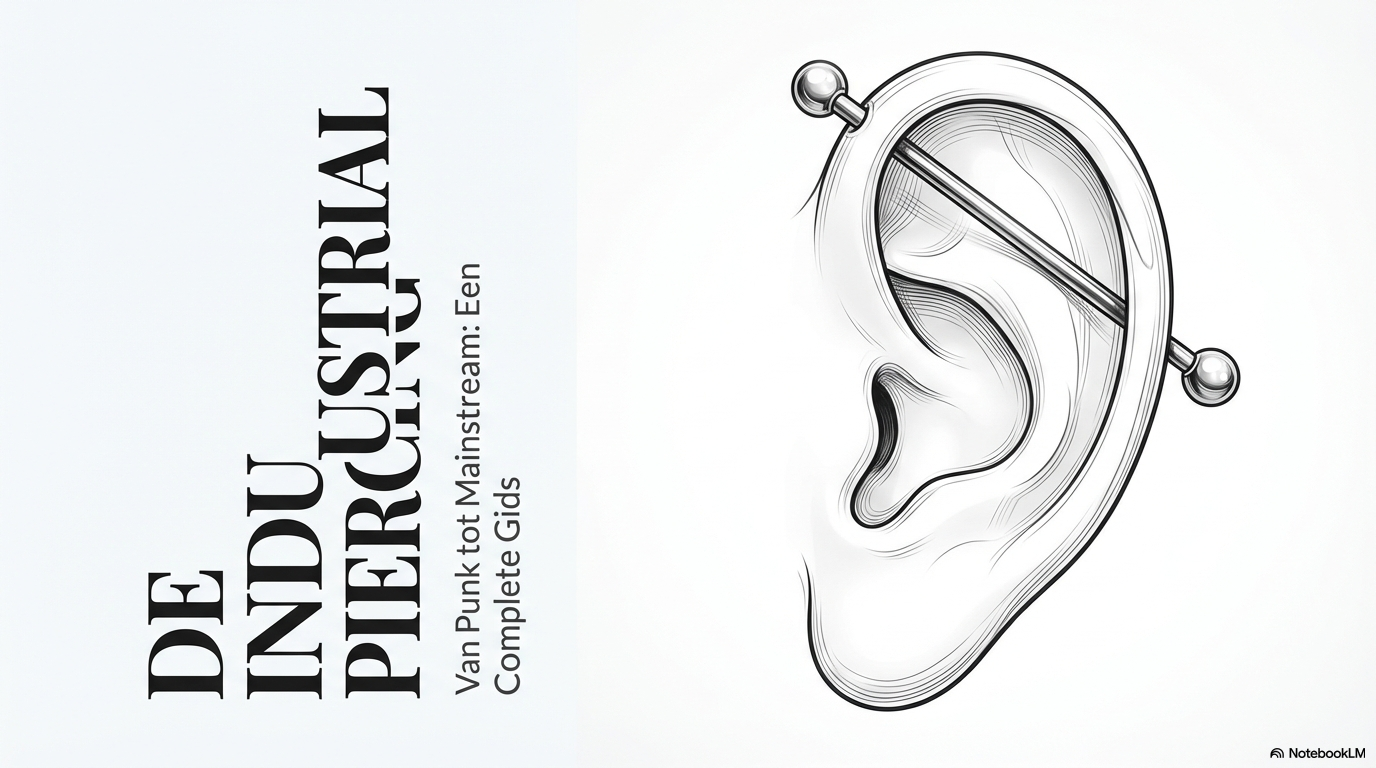
The industrial piercing is anything but a standard ear piercing. It's a construction, a line through cartilage, a conscious choice. Once strongly associated with the punk scene, in recent years it has become a much-loved and increasingly mainstream form of self-expression. Minimalist with a sleek bar, or bold with gemstones and details: the industrial piercing adapts to your style.
At Piercings Works we don't see the industrial as a trend, but as a technique. In this complete guide you'll read everything about its meaning, placement, pain, healing, aftercare and choosing the right jewellery.
What is an industrial piercing?
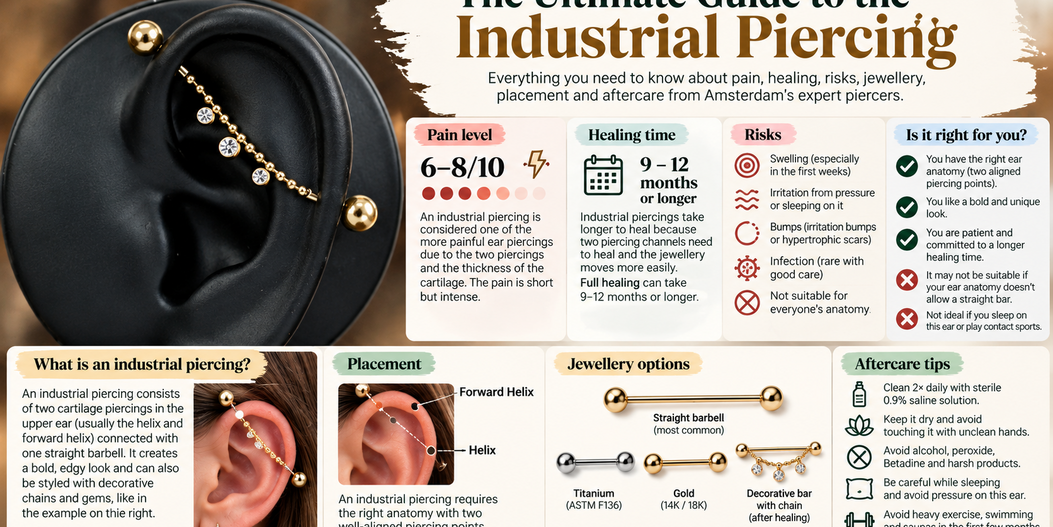
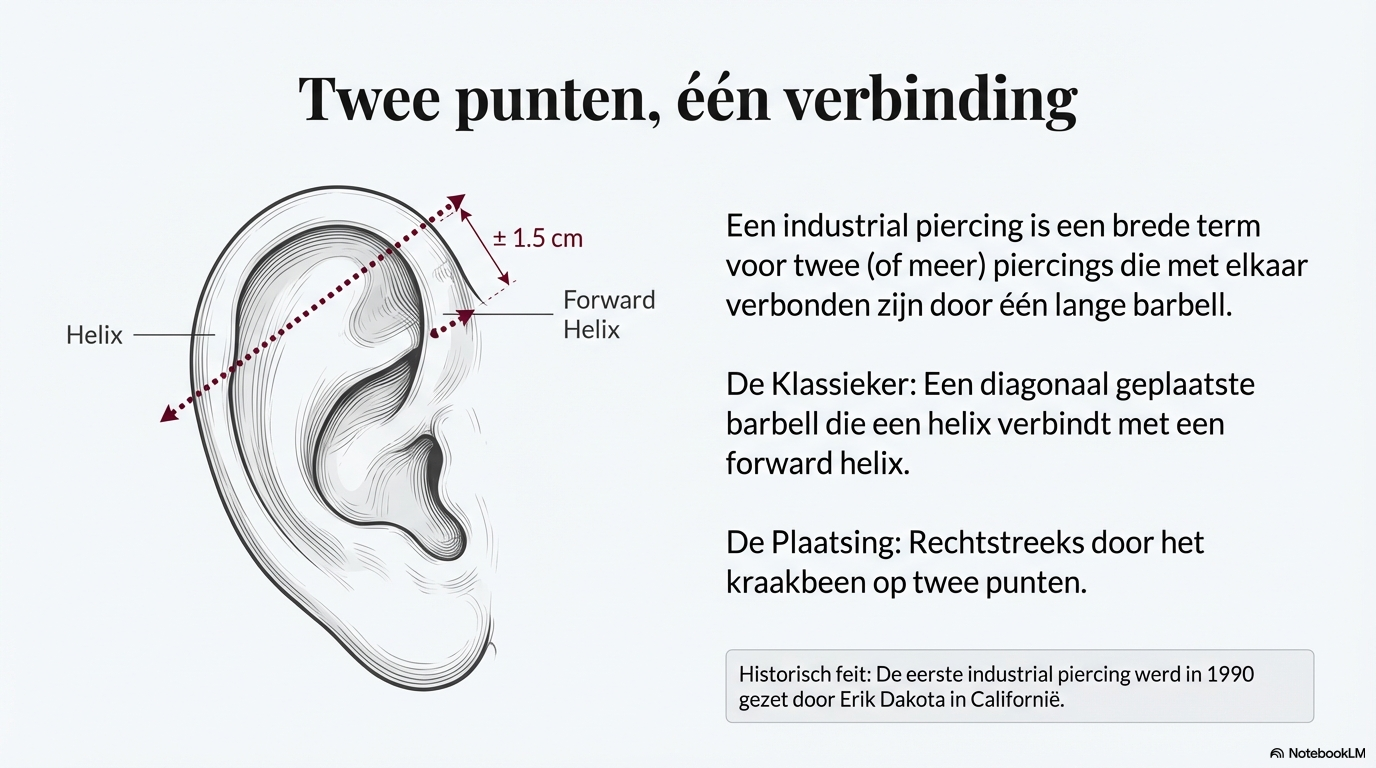
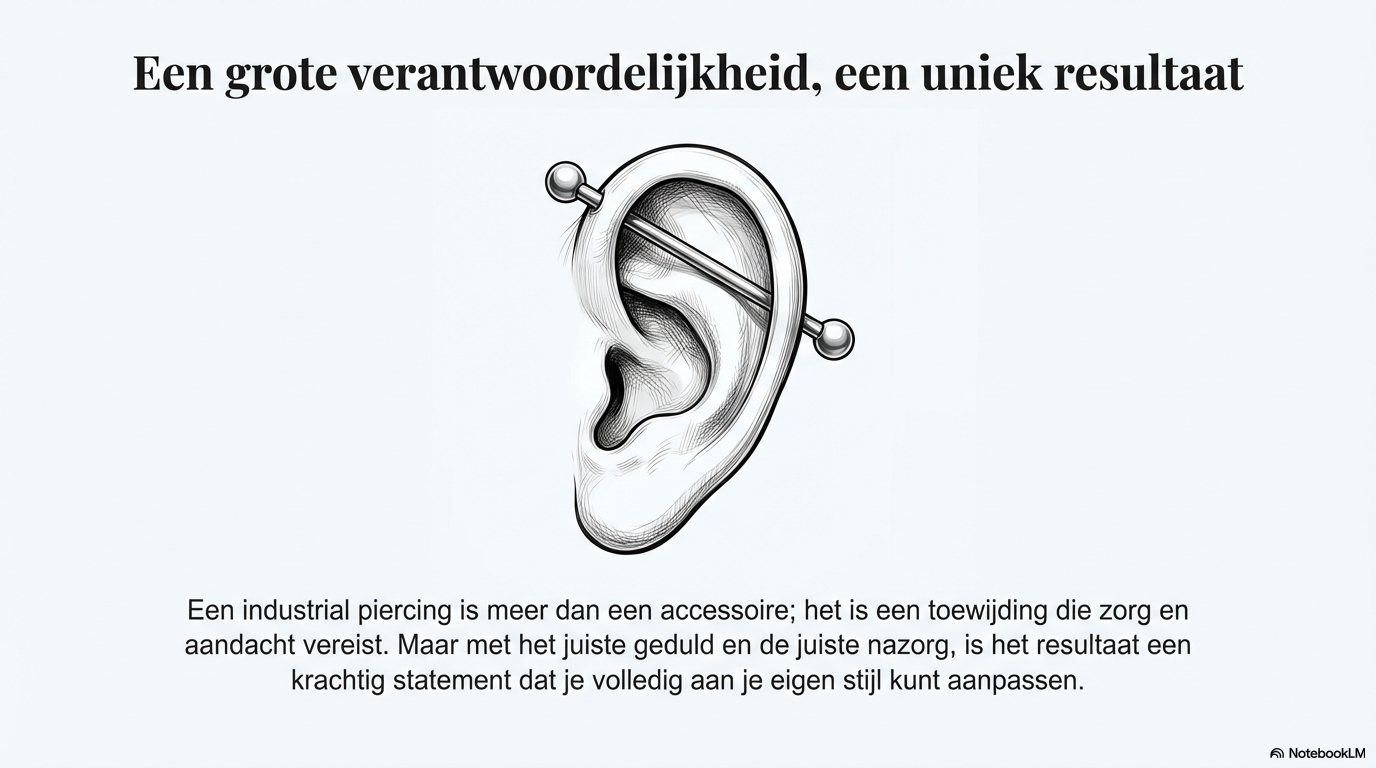
Industrial piercing is an umbrella term for two or more piercings in the ear that are connected by one long piece of jewellery, usually a straight barbell. The best-known version is the classic diagonal industrial, where a helix (outer upper ear) is connected to a forward helix (inner upper ear).
The term industrial is broader than this one shape. Horizontal placements, constructions through several layers of cartilage or fully custom combinations also count as industrial piercings. In principle: as soon as two or more cartilage piercings are connected by one long piece of jewellery, we call it an industrial.
How is an industrial piercing done?
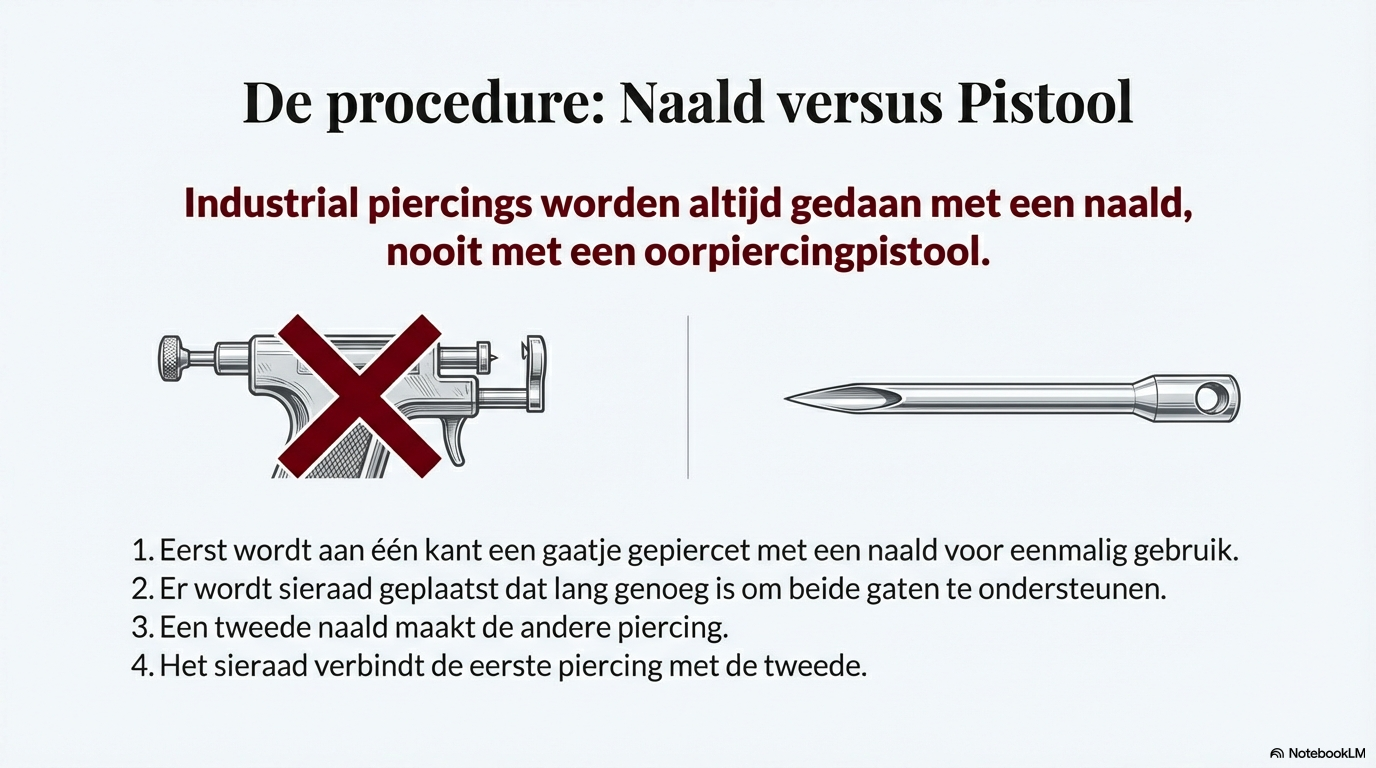
An industrial piercing is always done with a sterile needle, never with a piercing gun. Cartilage requires precision and control, and only a needle offers that accuracy.
The piercing is usually done in stages. First one hole is pierced and a piece of jewellery long enough to bridge both points is inserted. Then the second hole is made with a second needle, after which the jewellery connects both piercings. This order prevents unnecessary tension on the cartilage.
Not every ear is anatomically suitable for every industrial. The shape, thickness and position of the cartilage determine whether a particular placement is responsible. That's why an industrial is always assessed beforehand.
Does an industrial piercing hurt?
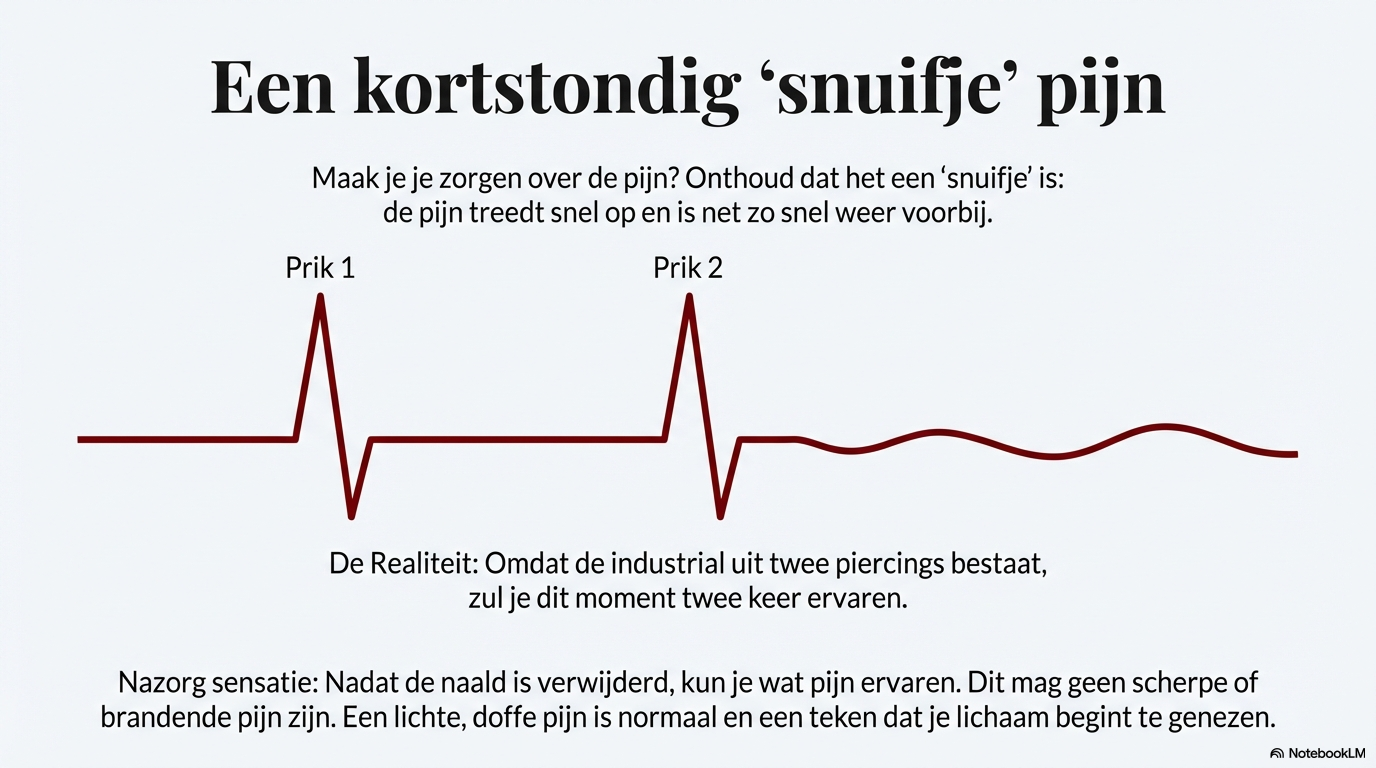
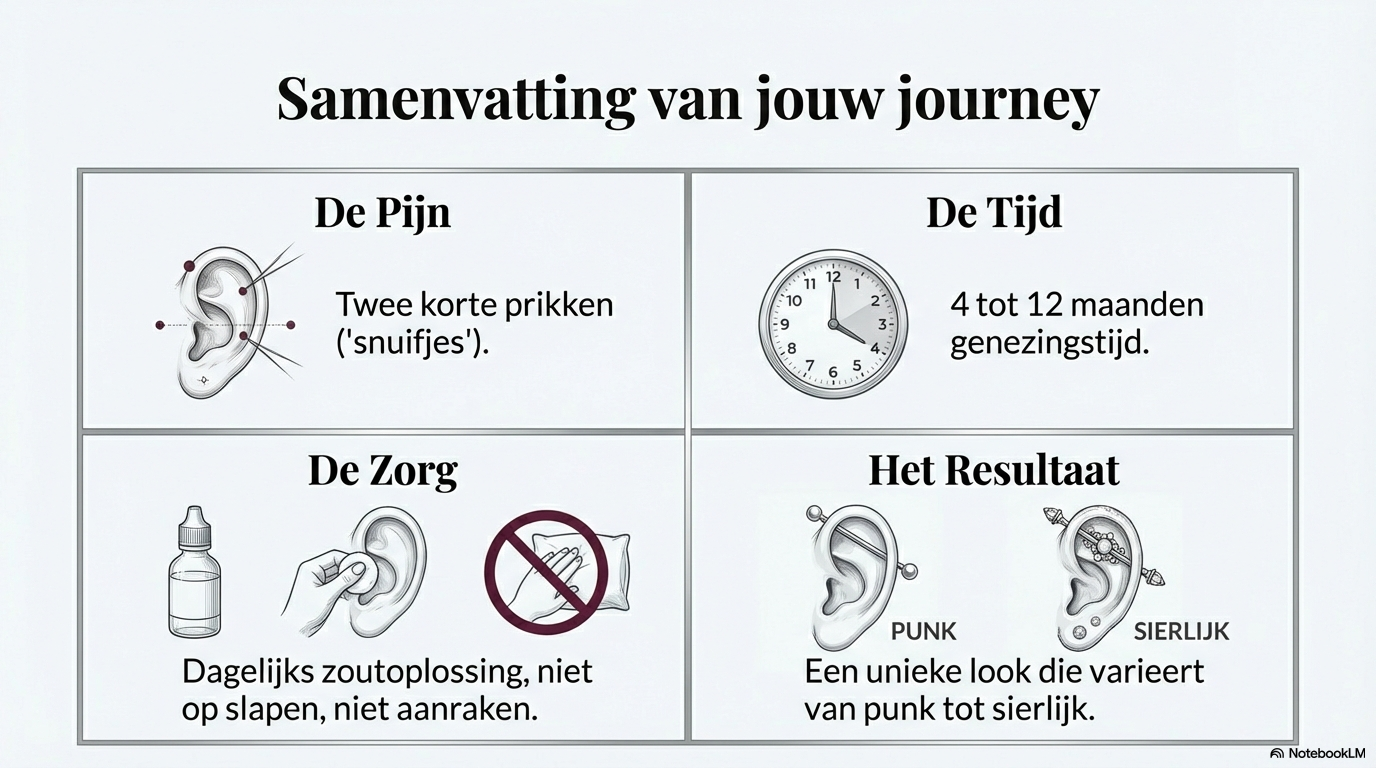
An industrial consists of two piercings, so you feel it twice. The pain is usually described as a short, sharp sting that passes quickly. The piercing itself doesn't take long.
After piercing, the area can be tender and feel a bit like pressure. That's normal and part of the start of the healing process. Persistent sharp or burning pain is not, and always needs to be checked.
Healing process and recovery time
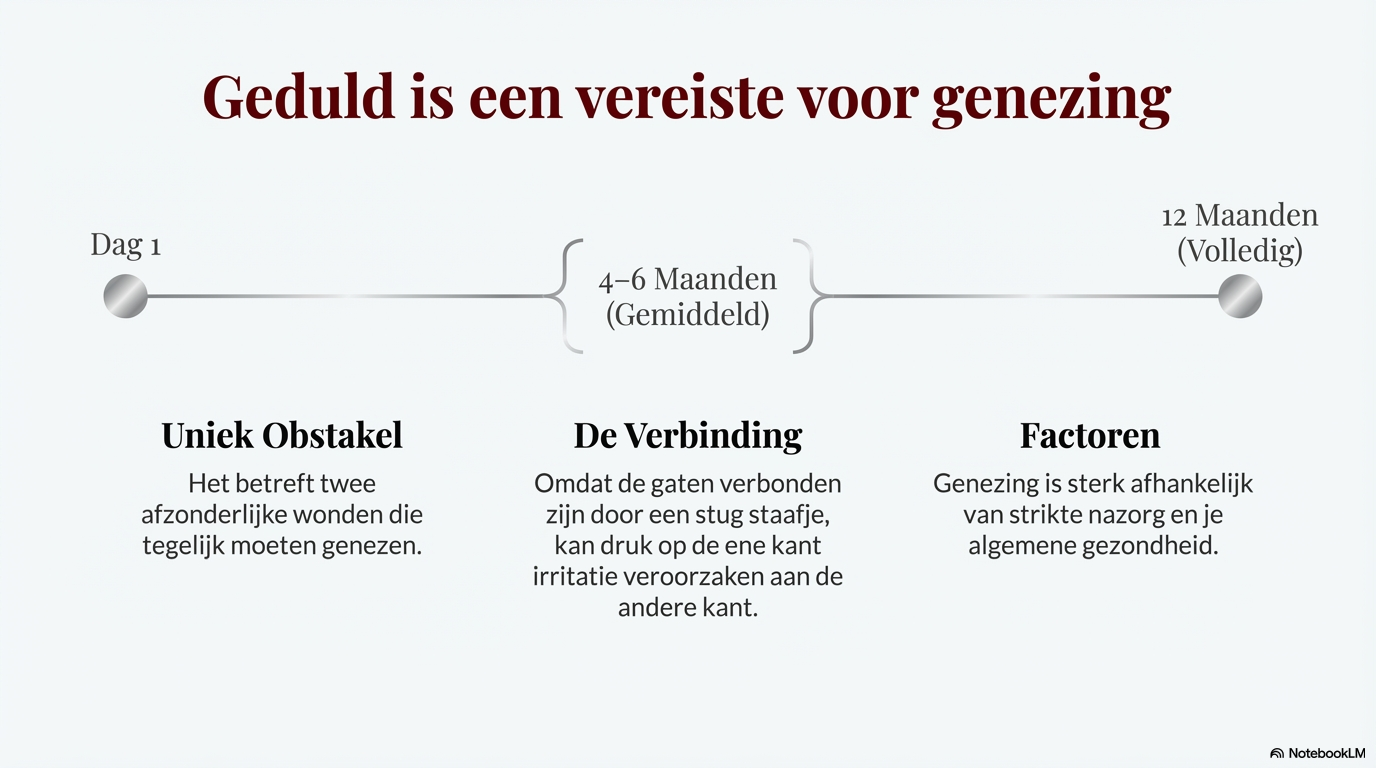
Industrial piercings take time and patience. Healing usually takes 6 to 12 months before everything has fully settled. That's because you're dealing with two separate cartilage piercings healing together.
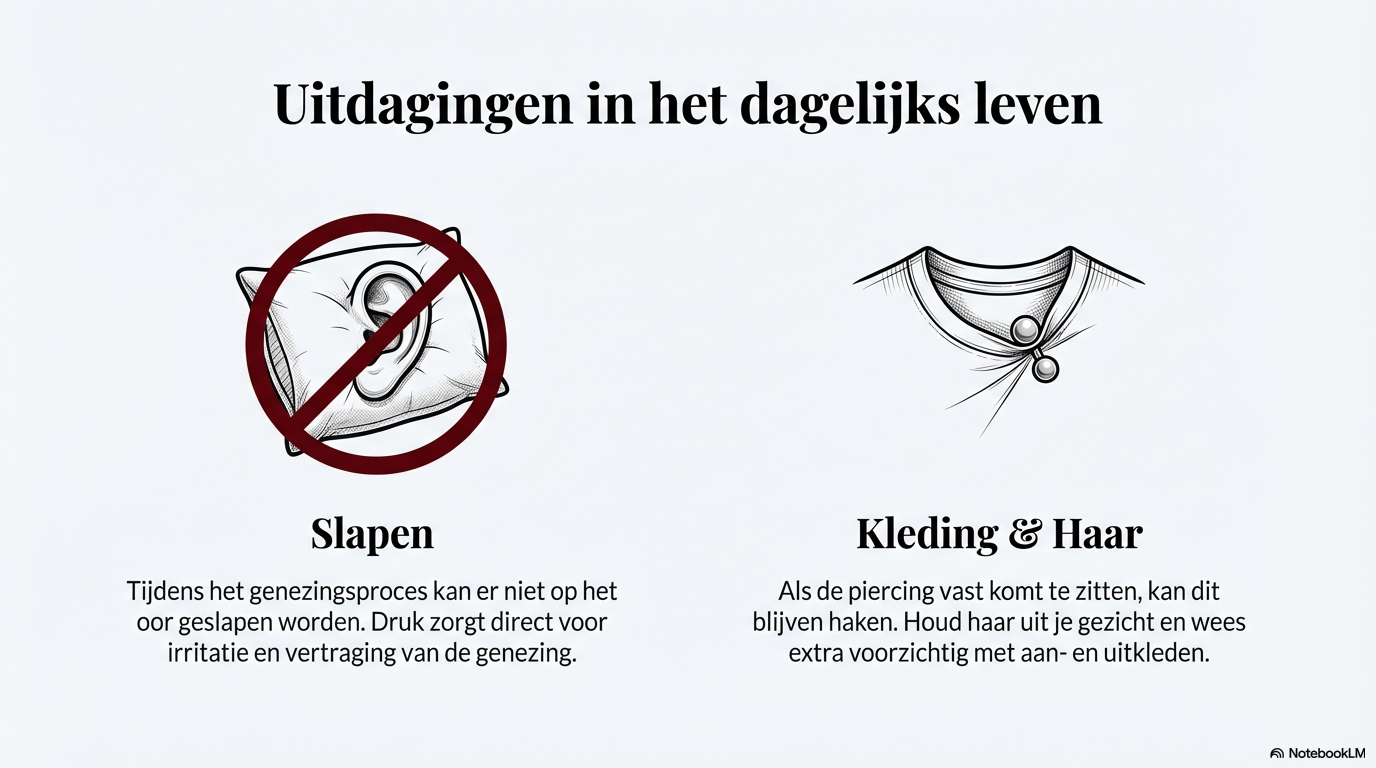
Factors that can slow down healing include pressure on the ear, sleeping on the piercing, hair getting caught, headphones, helmets or changing the jewellery too early. Clothing can also cause irritation without you realising.
During healing it's important to put as little strain on the ear as possible.
Aftercare: essential for a beautiful industrial
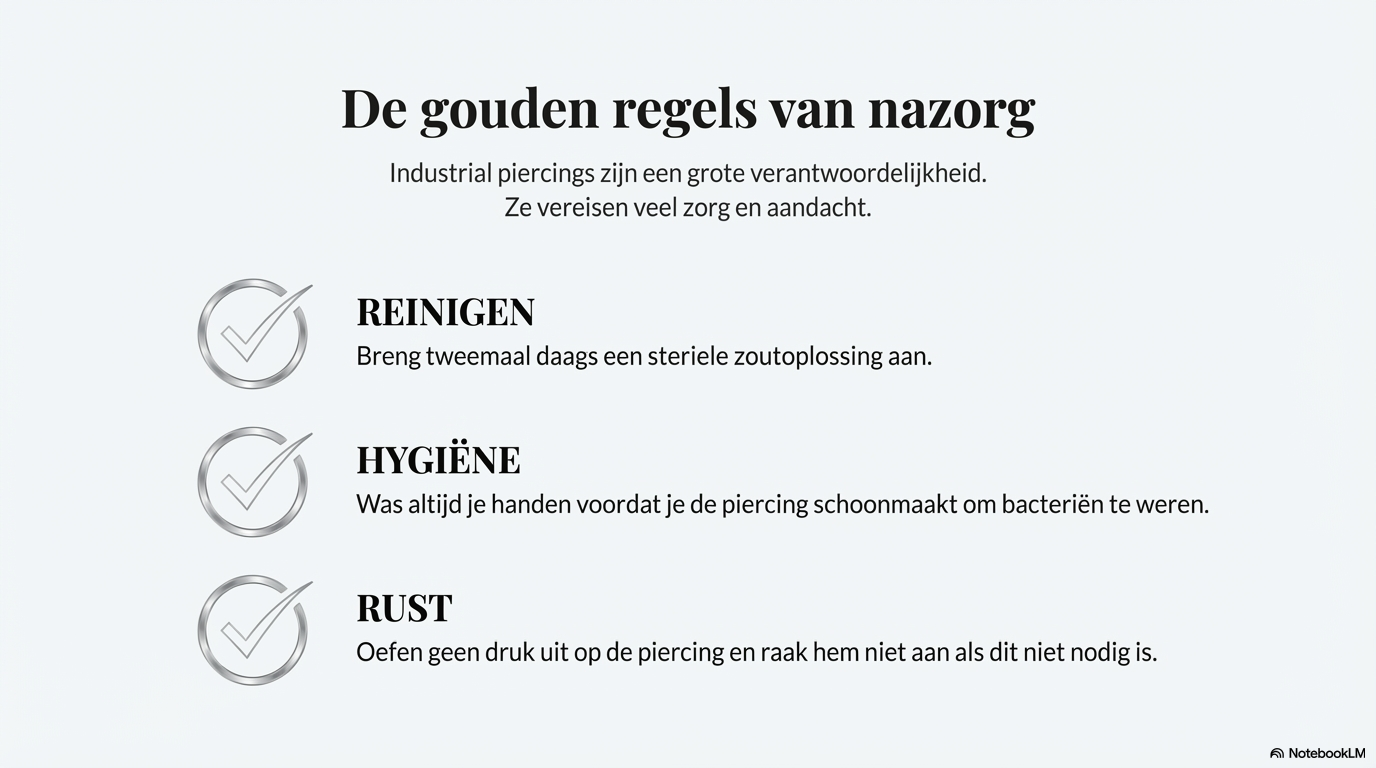
An industrial piercing needs consistent aftercare. Daily care isn't optional – it's a requirement.
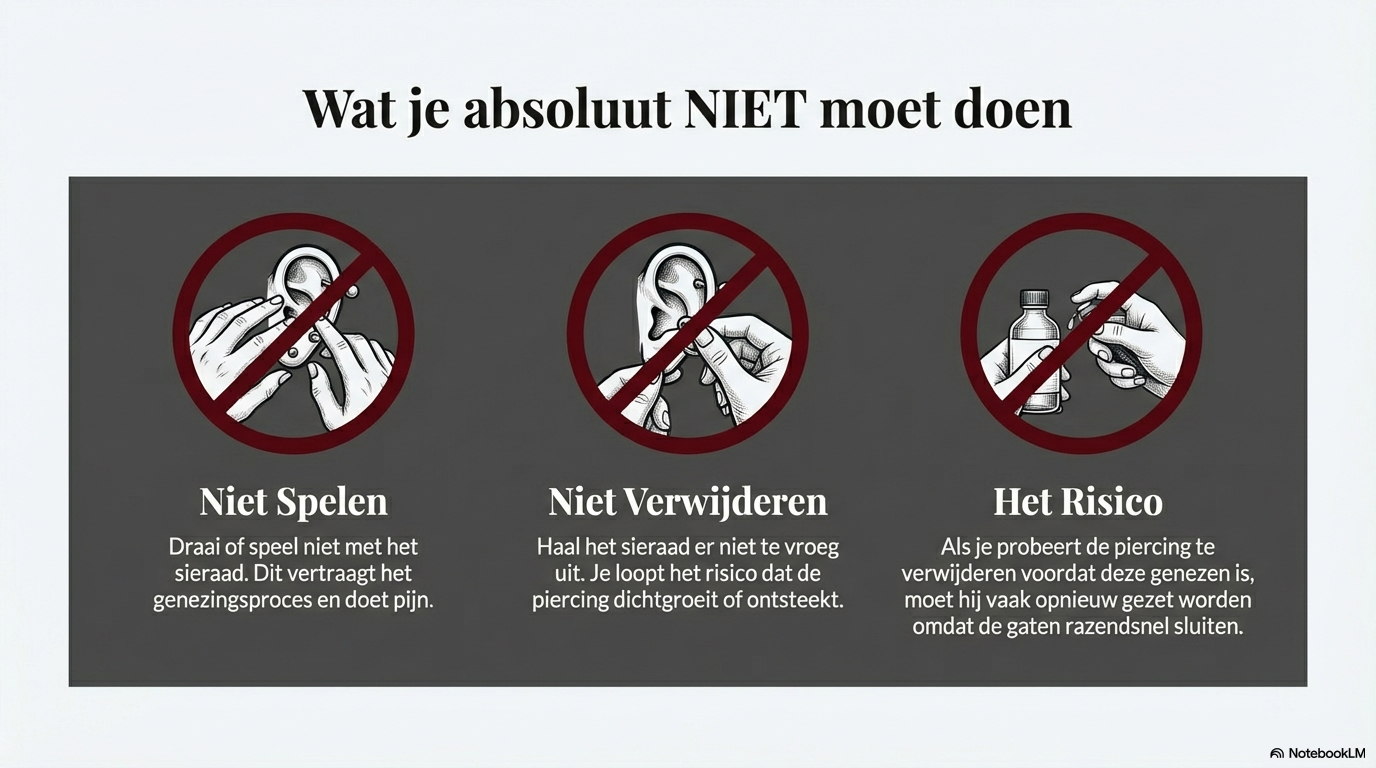
Clean the piercing twice a day with a sterile saline solution. If you do need to touch the piercing, always wash your hands first. Don't twist or play with the jewellery, even if it starts to itch. Avoid pressure on the ear and don't sleep on the piercing while it's healing.
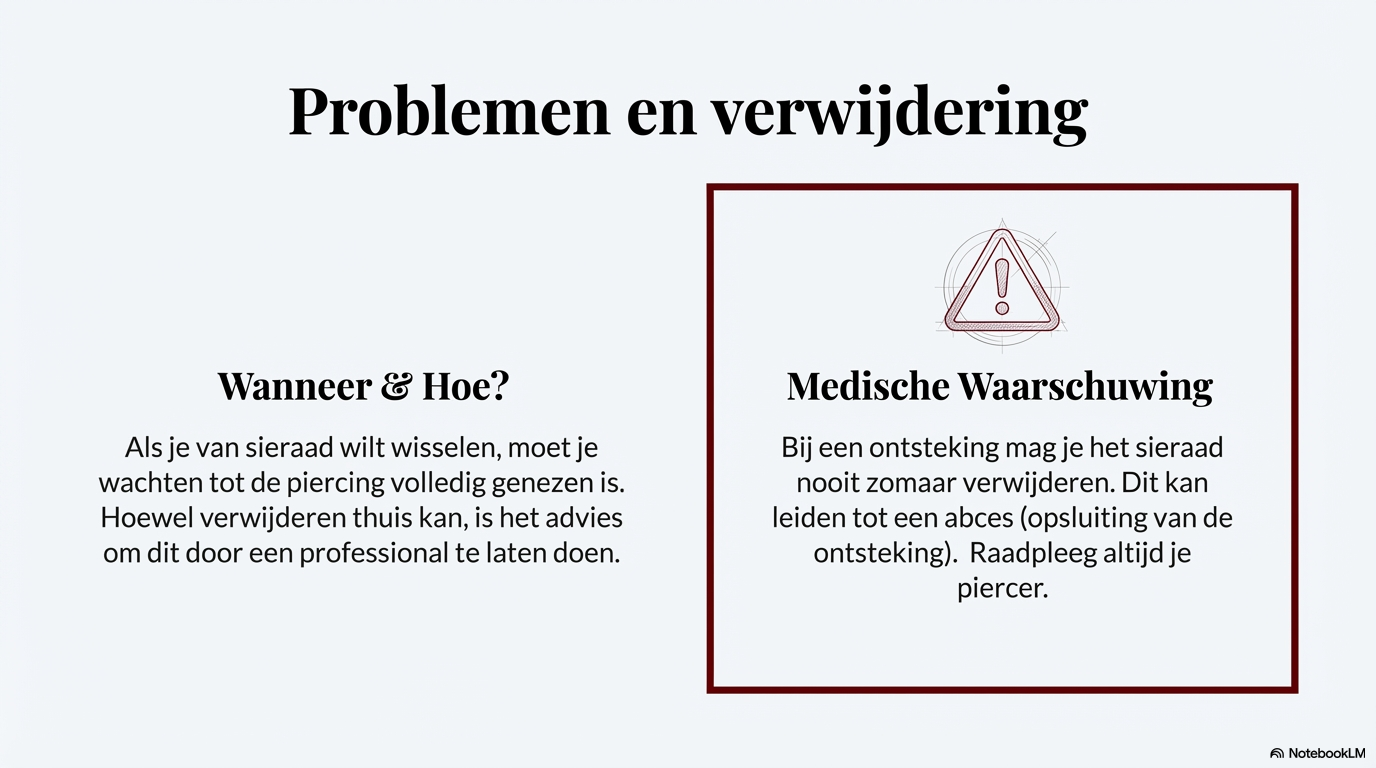
Don't remove the jewellery before the piercing has fully healed. Removing it too early increases the chance of it closing up, healing at an angle or becoming inflamed.
Jewellery and styling
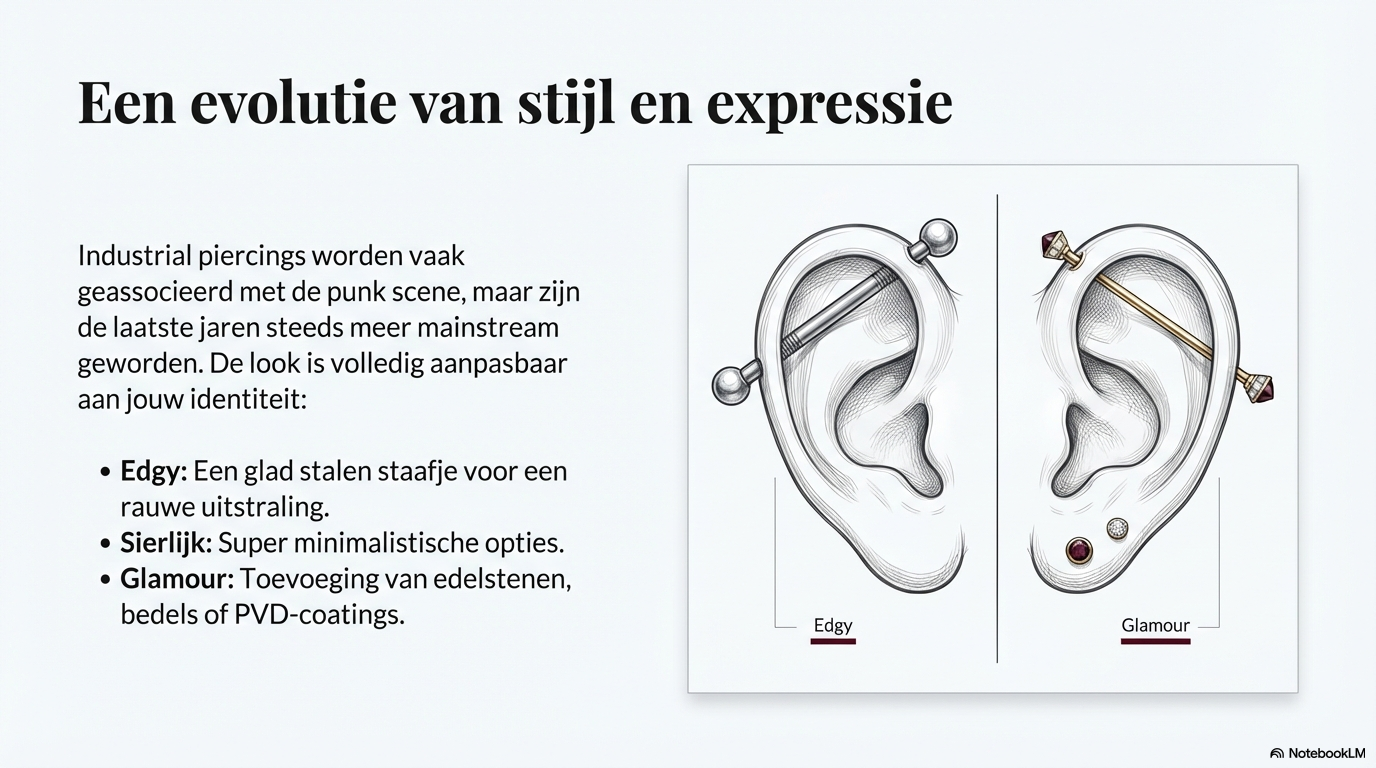
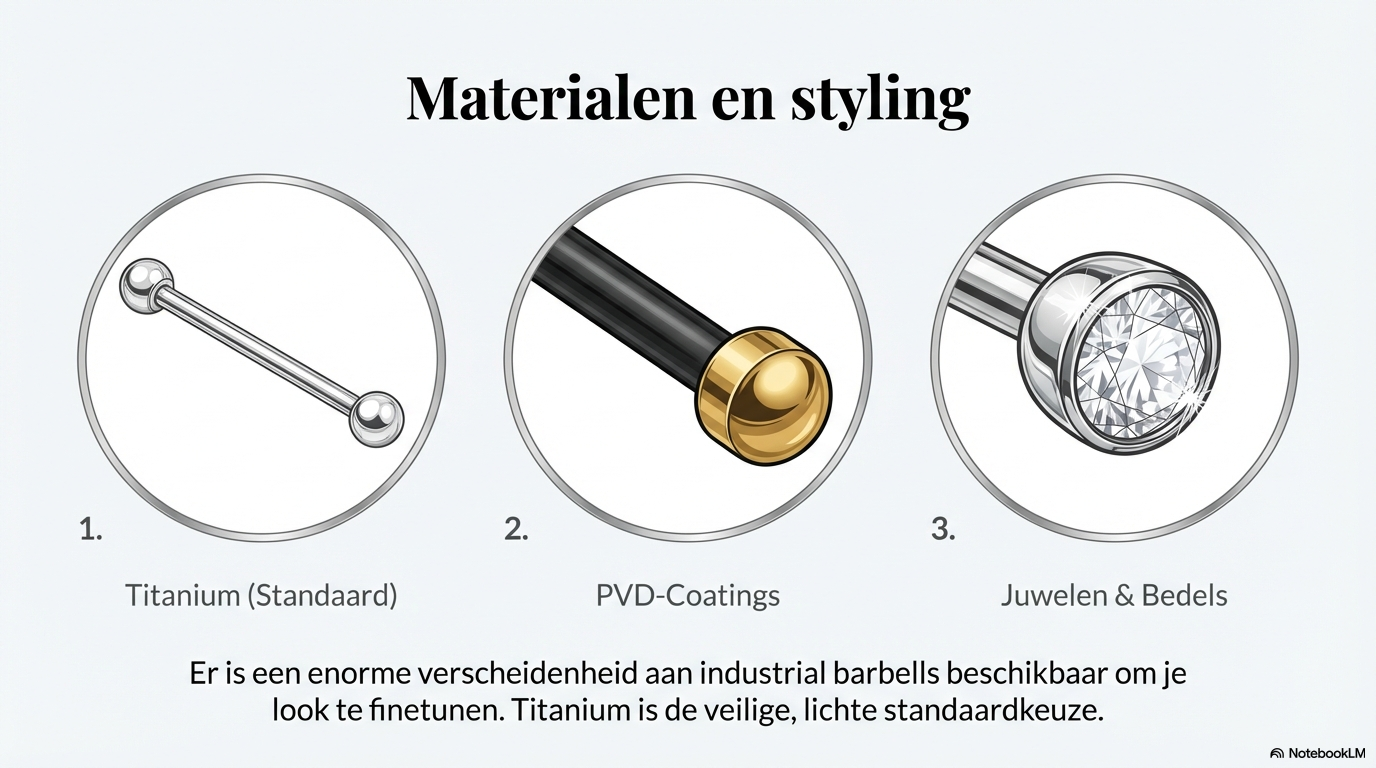
Once the industrial has fully healed, the options are endless. There's a huge variety of industrial barbells, from sleek and minimalist to bold and decorative. Commonly used materials are implant-grade titanium and solid gold. There are also versions with gemstones, charms and PVD coatings.
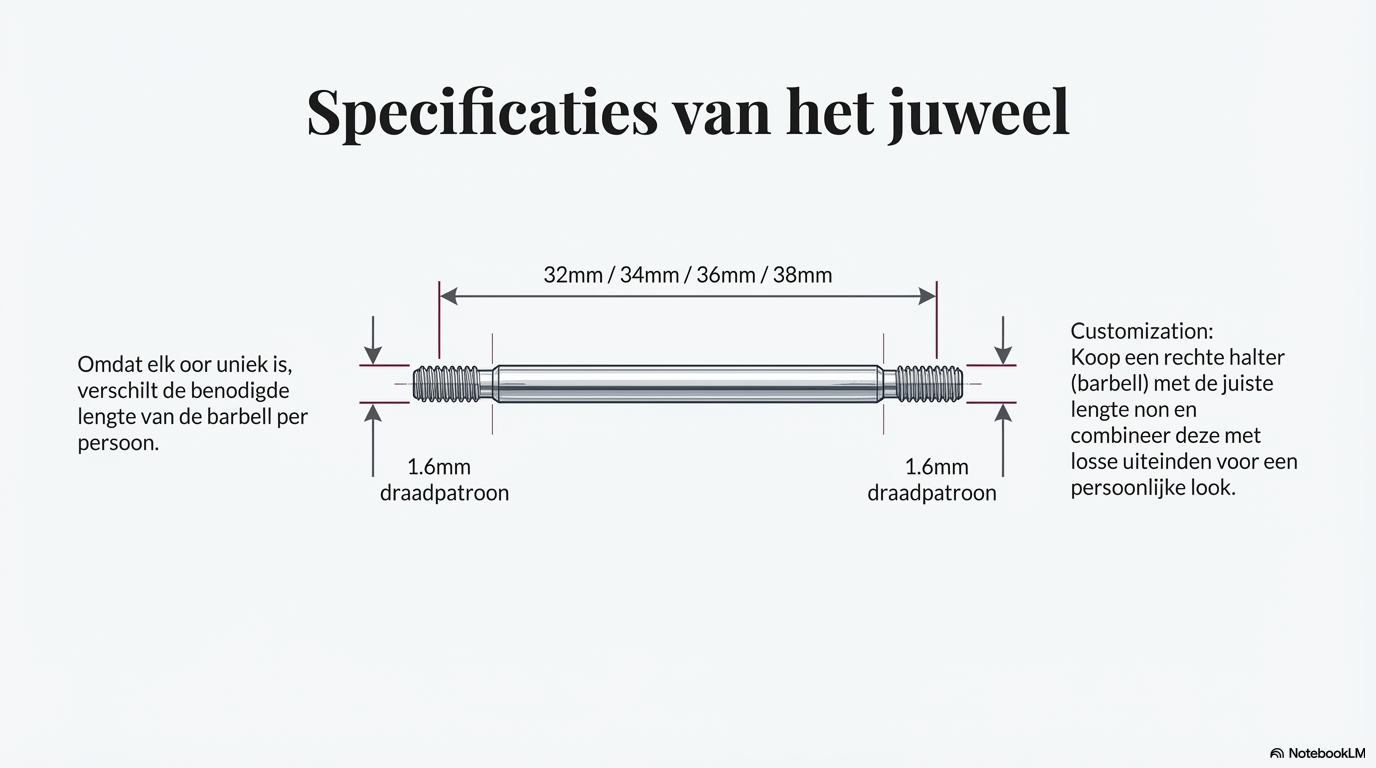
The length of the barbell differs from person to person, because every ear is unique. Common lengths are between 32 and 38 millimetres. The right length is essential to prevent tension on the cartilage.
If you want a personal look, you can put together a custom industrial by combining a straight barbell with separate 1.6 millimetre ends, as long as the threading and the system are properly matched.
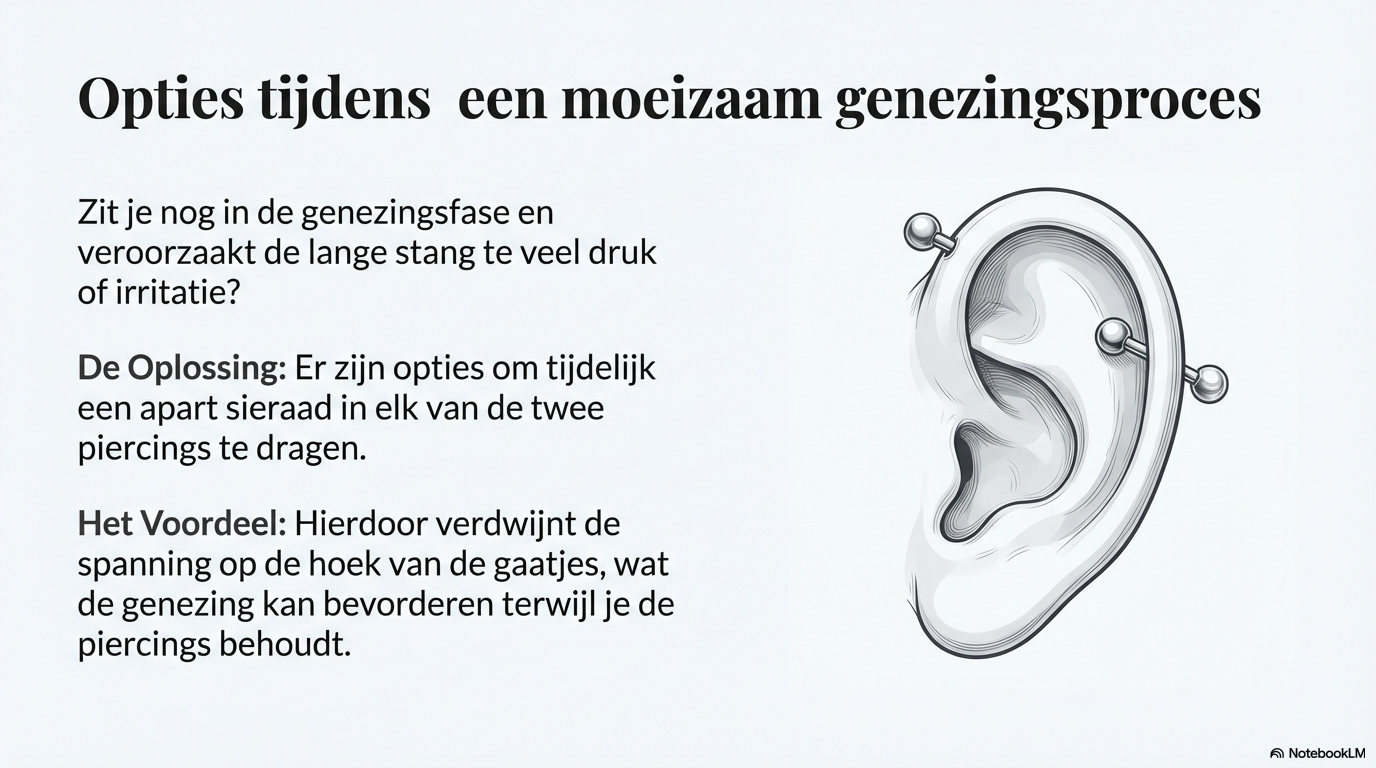
If you're still healing but want some variety, you can in some cases temporarily choose two separate pieces of jewellery instead of one long barbell. This is always done in consultation with a professional.
Booking an appointment for an industrial piercing
Want an industrial piercing and to be sure it's done with attention to anatomy, technique and healing? Then come to Piercings Works.
You can easily book an appointment online via our official booking page:
https://www.piercingzetten.com/
There you choose industrial piercing and pick a date and time yourself. Not sure whether your ear is suitable, or want advice first? You're also welcome to come into the studio for a personal assessment.
Finally
The industrial piercing isn't a passing trend, but a well-thought-out construction in cartilage. With the right placement, care and jewellery, it's a powerful and lasting form of self-expression.
You don't wear an industrial just because it looks good, but because it's right. In shape, technique and feel.