
If you decide to remove a septum piercing, it usually leaves little to no visible mark. That makes it an excellent piercing for those of us who can't quite make up our minds. Here you'll find everything you need to know about this nose piercing.
What is a septum piercing?
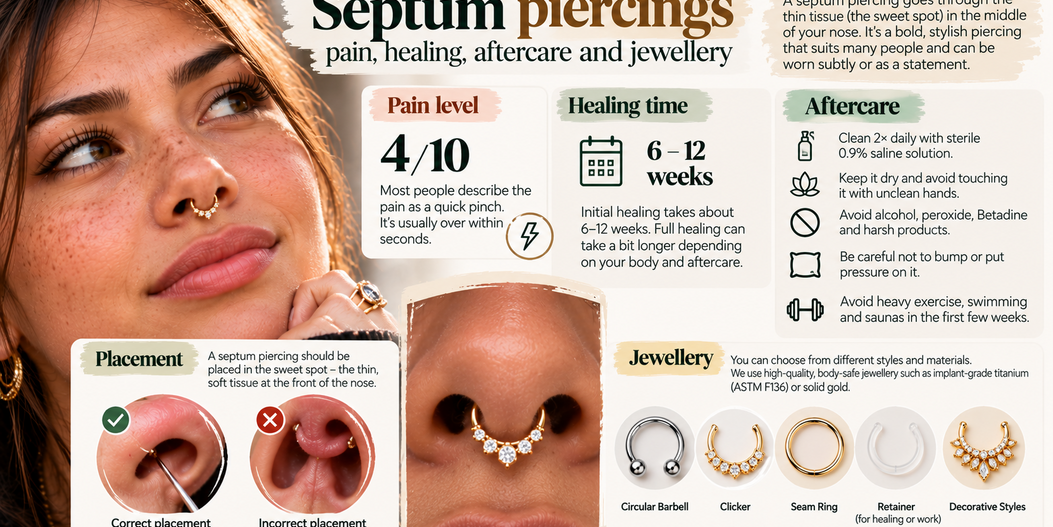
The septum is the thin piece of cartilage that separates your left and right nostrils. With a septum piercing, a piece of jewellery is inserted into the septum using a sterile needle.
First your piercer marks the spot where the piercing will go. Then your piercer holds the cartilage in place with septum forceps. The needle is then inserted, after which the jewellery is threaded through and secured.
Bear in mind that septum piercings accentuate your nose and that everyone's face is unique. That's why it's important to find an experienced piercer who takes your personal anatomy into account.
Pain and healing time
Everyone has a different pain threshold, so how much pain you'll feel differs from person to person. It won't be much more painful than a nostril piercing.
Your eyes will usually water and you may sometimes feel the urge to sneeze straight after being pierced, but in general the pain really isn't too bad.
You can expect to follow the aftercare instructions carefully for about three or four months after the piercing is done, but your personal health and immune system also play a part.
Aftercare
Aftercare for a septum piercing is quite simple. We recommend a saline solution to clean it. Make sure you clean the pierced area twice a day until it has fully healed.
Be careful not to wear clothing that can catch on the septum ring, so you don't pull on it and irritate it. Don't play with your piercing and don't touch it unnecessarily. Never remove your jewellery before the piercing has fully healed.
Risks
If you don't stick to the correct aftercare routine your piercer has described, your piercing can become inflamed. If you're worried this is the case, have your piercer take a look. You can tell your piercing is inflamed by (a lot of) pain, redness, warmth, a bad smell and/or green or yellow discharge. If the piercing is very swollen, contact your piercer or see a doctor if necessary.
How do you change a septum piercing?
Although the healing time is around four months, we recommend not changing the jewellery during the first year. When the time comes, it's best to have your piercer change it for you.
Once the piercing has fully healed, your piercer unscrews the ball or bends the ring away from the septum before slowly removing the jewellery. The area is then cleaned with a saline solution, after which the new, sterilised jewellery is slid through the septum piercing into the right position.
Want to change your jewellery? Just come by – your piercer will be happy to do it for you.
What jewellery is used for a septum piercing?
A septum piercing should always be done with a horseshoe-shaped barbell (also called a circular barbell) or a ring, such as a captive bead ring (CBR).
Circular barbell: A circular barbell, also called a horseshoe, is a curved, horseshoe-shaped metal bar with a ball on each end. The balls screw on and off, so the jewellery can be inserted through the piercing and secured. Its curved shape gives a good fit around the natural shape of your nose.
Ring: Another option for septum jewellery is a ring, a piece of flexible metal bent into a ring shape. A captive bead ring (CBR) is a ring held closed by a small bead that sits between the two ends. This jewellery can be removed by taking out the bead and opening the ring to create a gap between the two ends that's big enough to slide it out. Some people with septum piercings prefer rings called clickers, which have a thin bar that clicks into place and connects each end of a circular ring.
Which materials are used for a septum piercing?
It's very important that jewellery is always implant grade. Don't use nickel or cheaper-quality jewellery. This can cause irritation, inflammation and other problems.
Titanium: implant-grade titanium is a good choice for jewellery because it's very similar to steel but contains no nickel. This means you can choose from a wide variety of jewellery and designs without risking an allergic reaction. Titanium is also a lightweight material.
Gold: If you'd rather not wear silver-coloured jewellery, gold is a great option! Just make sure the gold jewellery is at least 14 carat to avoid irritation.
Ready to finally get your new piercing? Book your appointment here.
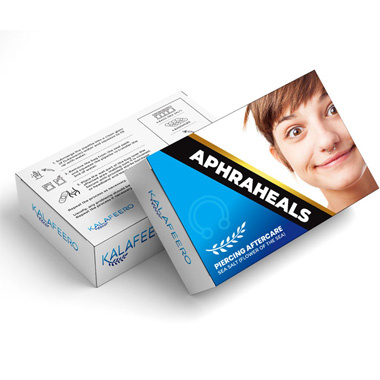
AphraHeals - Piercing Sea Salt Patch Against Inflammation
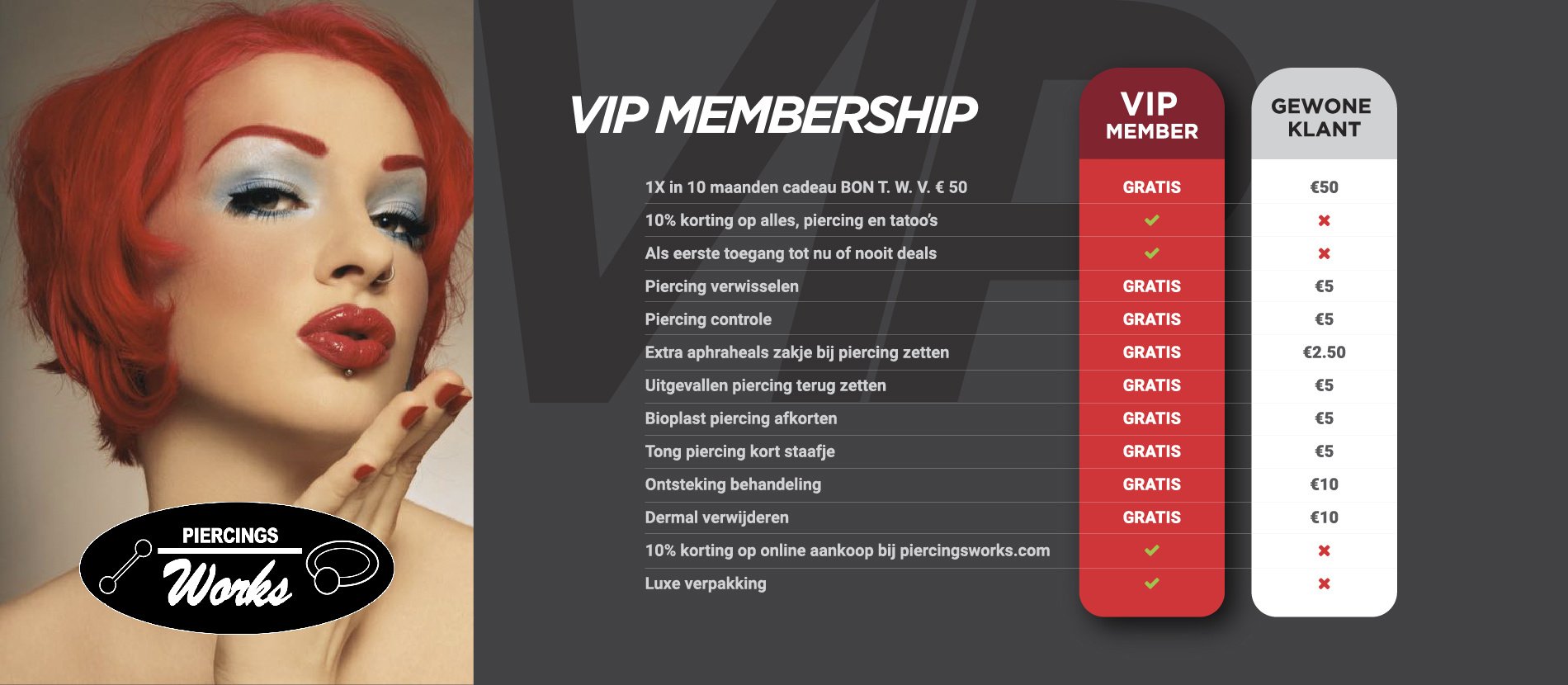
Do you spend 100 euros or more a year in our studio or online shop? Then the VIP membership is for you! As a VIP member you get access to exclusive offers and discounts, and after one year you receive a voucher worth €50,-
Sign up now via this link.