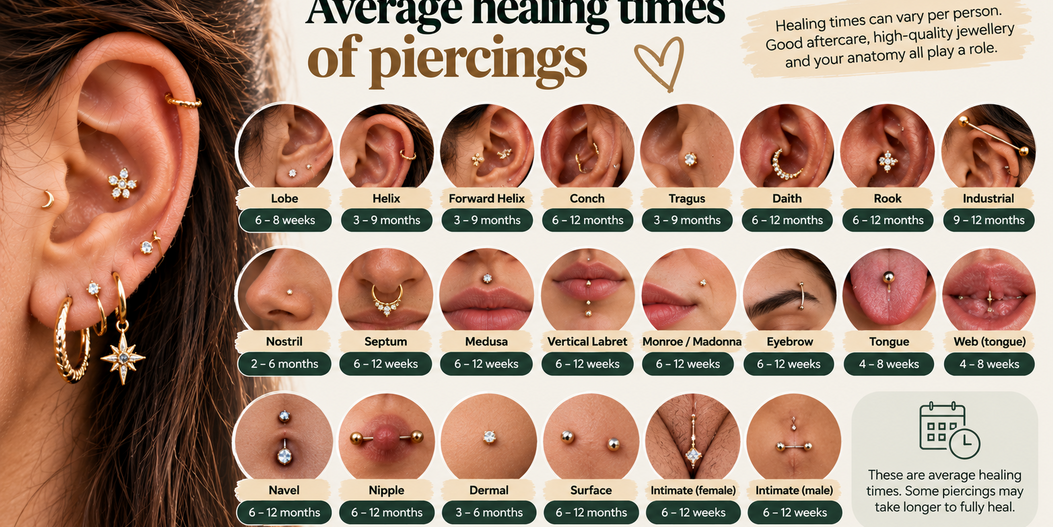

If you understand healing, you're less likely to become impatient. If you become impatient, you disrupt healing.
What really determines healing time?
A piercing doesn't heal because weeks go by, but because the body gets the chance to adapt to a controlled trauma.
The most important factors:
-
Tissue type (soft tissue vs. cartilage)
-
Blood supply to the area
-
Mechanical strain (movement, pressure, snagging)
-
Material and finish of the jewellery
-
Aftercare discipline and lifestyle
The rule of thumb: the less disruption, the more stable the healing.
Why averages aren't guarantees
Two people with the same piercing can have completely different healing journeys. That doesn't mean one of them is ‘doing something wrong’.
-
Healing faster than average: possible
-
Healing more slowly than average: normal
-
Pain-free ≠ healed
-
Calm on the outside ≠ healed on the inside
Healing happens in layers. What you see is never the whole story.
Ear piercings – a gentle start, a long journey
Earlobes
Earlobe piercings sit in tissue with a good blood supply and usually respond predictably.
-
Functional healing: 4–8 weeks
Piercings placed higher up in the earlobe often sit in transitional tissue and need more time.
Cartilage (helix)
Cartilage heals slowly because of its limited blood supply.
-
Functional healing: 8–12 months
Every knock, bit of pressure or sleeping position has a direct effect here.
Daith
Placed in folded cartilage – relatively protected, but sensitive.
-
Functional healing: 4–8 months
Rook
A complex cartilage piercing with higher aftercare demands.
-
Functional healing: 6–18 months
In short: complex anatomy calls for complex discipline.
Facial piercings – a balance between movement and recovery
Eyebrow
A surface piercing that depends on skin tension.
-
Functional healing: 2–4 months
Nostril
Prone to irritation because of movement and facial expressions.
-
Functional healing: 4–6 months
Lower lip
Heals faster on the inside than on the outside.
-
Functional healing: 2–3 months
Septum
Placed in soft tissue with a good blood supply.
-
Functional healing: 2–4 months (at 1.2 mm)
Tongue
One of the fastest-healing piercings thanks to its rich blood supply.
-
Functional healing: 3–6 weeks
Healing quickly here doesn't mean changing quickly.
Body piercings – movement as the dominant factor
Navel
A dynamic area with constant pulling forces.
-
Functional healing: 6–12 months
Changing jewellery too early is the most common mistake here.
Nipple
Sensitive to friction, temperature and hormonal influences.
-
Functional healing: 6–12 months
What slows down healing structurally?
-
Changing jewellery too early
-
Poorly finished or unsuitable material
-
Over-cleaning
-
Pressure, snagging and repeated trauma
-
Not enough rest for the body
Healing rarely fails because of one mistake, but because of repetition.
What really supports healing?
-
High-quality, body-friendly jewellery
-
Rest and predictability
-
Consistent, gentle aftercare
-
Patience and realistic expectations
Remember: stability before aesthetics.
Conclusion
Average healing times are signposts, not deadlines. A piercing that needs longer isn't a problem – a piercing that's forced too early is.
If you respect your body, you'll be rewarded with stability, comfort and long-lasting enjoyment of your piercing.
In doubt? Always have it checked. Healing isn't a gamble – it's a process you can guide.
Want a new piercing? You can now book your appointment with us!
Get pierced at a time that suits you! You can pay straight away, so you don't have to think about it during your appointment.
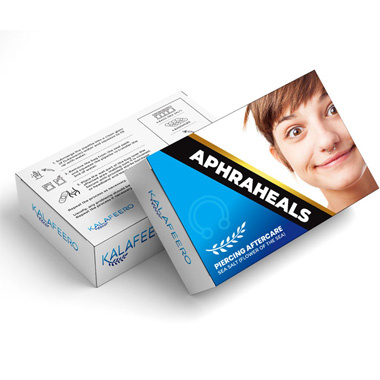
AphraHeals - Piercing Sea Salt Patch Against Inflammation
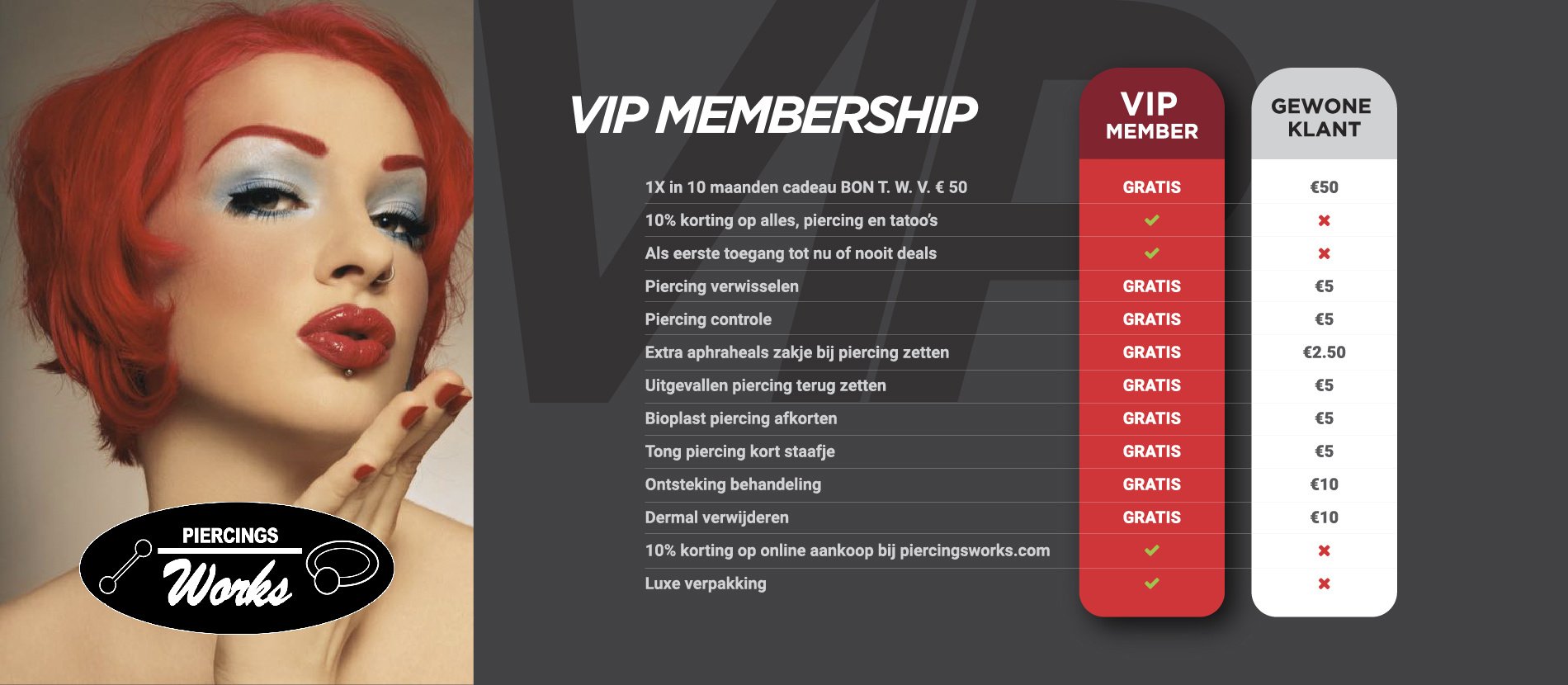
Do you spend 100 euros or more a year in our studio or online shop? Then the VIP membership is for you! As a VIP member you get access to exclusive offers and discounts, and after one year you receive a voucher worth €50,-
Sign up now via this link.