
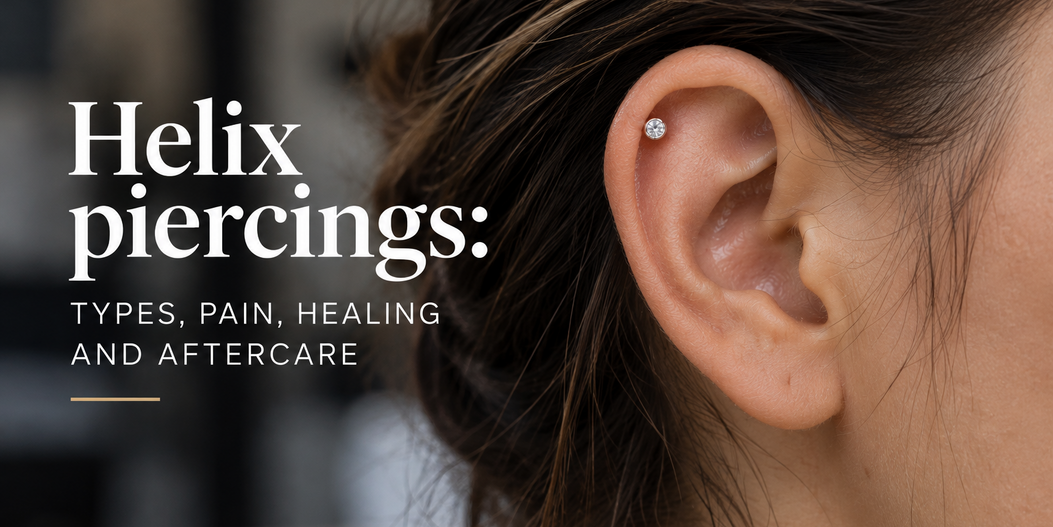

What is a helix piercing?
A helix piercing is any piercing done in the upper cartilage of the ear – but there are several types of helix piercing. A standard helix piercing is placed in the outer upper cartilage, but you can also go for forward, backward, double or even triple helix piercings.
What is a forward helix piercing?
What's the difference between a forward helix piercing and a backward helix piercing? It's quite simple: follow the curve of your cartilage around the ear until you reach the side of your face (i.e. directly above the tragus) – this piercing area is called the forward helix. You can also have double or triple forward helix piercings.
What is a double or triple helix piercing?
While the classic helix means the upper, outer cartilage is pierced once, having two or three piercings in the same spot, just above each other, is called a double or triple helix piercing. So it's the same piercing; the name simply refers to the number of helix piercings you have in the same ear.
Do helix piercings hurt?
Pain tolerance varies, but in general your helix will hurt more than your earlobe because it's done through cartilage. Cartilage tissue is thicker, so more force may be needed to pierce through it. But the pain is temporary and won't last long.
How long does a helix piercing take to heal?
Healing depends on several factors such as your overall health, sleep and stress levels and aftercare, but it's wise to allow a healing period of at least 2 months. The initial healing time for a helix piercing is two to four months. However, it takes eight to twelve months for the piercing to heal fully.
What about aftercare?
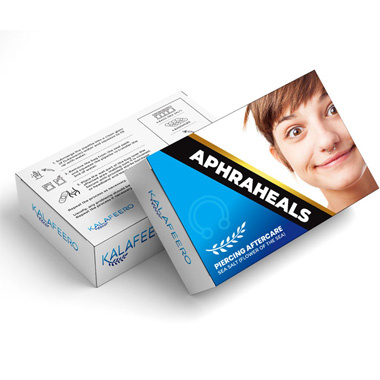
Good aftercare is essential to make sure your piercing not only looks healed but feels healed too. Keep your hands off the piercing and don't twist or play with it. Use a saline solution or saline spray twice a day (such as the AphraHeals aftercare spray). You should also watch out for snagging it and for sleeping on the piercing, as this can slow down the healing process.
Use a saline solution to clean the piercing. The salt helps remove excess discharge.
What should I do if my helix piercing is inflamed?
Although some irritation is common, with the right aftercare an inflammation shouldn't develop. It's completely normal to experience crusting (dead skin cells), swelling, tenderness, itching, bruising or some pain. These symptoms usually only last a few weeks. If you notice other symptoms or keep having a lot of pain or redness, it's a good idea to go back to your piercer.
Helix piercing jewellery
The most common jewellery for a helix piercing is a ring or a labret.
Your piercer will choose a labret during healing. Once your piercing has healed, you can change the jewellery to suit your personal style.
Ready to finally get your new piercing? Book your appointment here.
AphraHeals - Piercing Sea Salt Patch Against Inflammation
Do you spend 100 euros or more a year in our studio or online shop? Then the VIP membership is for you! As a VIP member you get access to exclusive offers and discounts, and after one year you receive a voucher worth €50,-
Sign up now via this link.