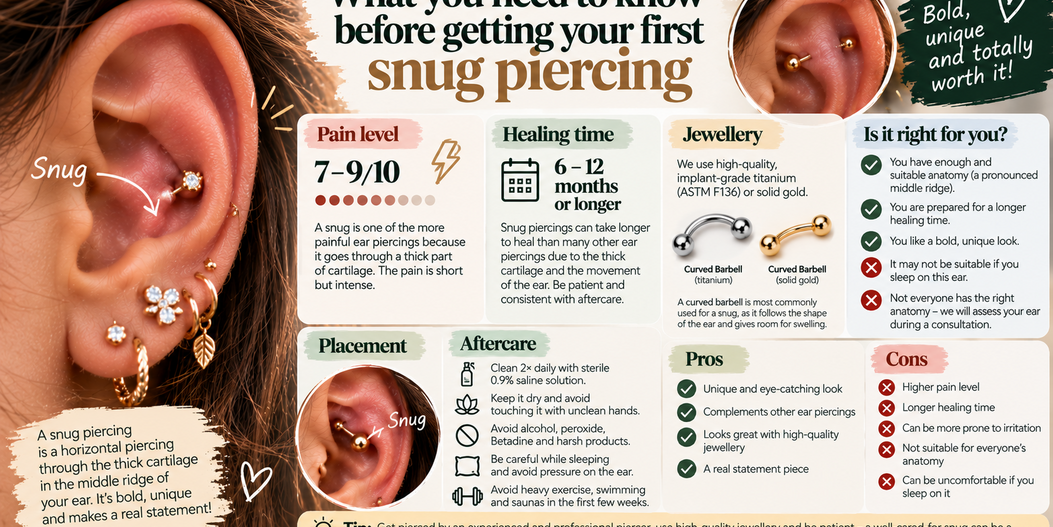

A snug piercing is a horizontal piercing that sits directly above the anti-tragus (the inner ridge of the cartilage part of the ear). What makes a snug piercing unique is that both the entry and exit points are visible on the front of the ear, instead of going through to the back.
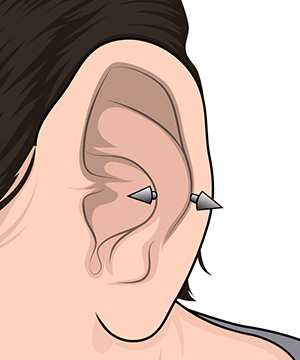
Apart from the fact that it can be painful, it's also not one-size-fits-all; it's quite possible that the shape of your ear doesn't allow for this piercing.
Despite all this, a snug piercing is a unique and interesting ear piercing for anyone who wants something unusual. There's also a wide range of snug piercing jewellery available, so you can switch it up and always wear a piercing you love.
There are lots of questions about this popular piercing, so we'll tell you what to consider before getting one yourself. From pain level to aftercare – if you're considering a snug piercing, you'll find everything you need to know here.
How much do snug piercings hurt?
Pain and how you experience it differs from person to person, but even more important than the pain is whether a snug piercing can be placed on you at all. Because helix piercings usually sit much further out on the ear and closer to the rim, that area is much easier to pierce than the area needed for a snug piercing.
Snug piercings sit closer to the inside of the ear, and the cartilage is relatively thick in this spot. If you go to a professional piercer (which we always recommend), the snug piercing will be done quickly and smoothly, so the procedure is as comfortable as possible and you feel as little pain as possible.
How long does a snug piercing take to heal?
The healing time of a snug piercing is similar to that of other cartilage piercings. The snug and all other cartilage piercings usually need six to nine months or longer to heal fully.
What aftercare does a snug piercing need?
We recommend using a saline solution to clean the piercing.
Rinse your piercing twice a day, followed by the saline solution your piercer tells you to use. Make sure you pat it dry with a paper towel – not a cloth towel – to help prevent a possible bacterial infection.
Your snug piercing heals best if you leave it alone as much as possible. That's why it's important not to touch your new piercing. Like all other piercings, a snug piercing can become irritated and even inflamed if it isn't handled carefully, especially while it's healing.
Don't sleep on the pierced ear or pull on it, so you don't irritate it. You should also keep your snug piercing away from things that can cause infections through bacteria, such as dirty pillowcases, headphones, hats or your phone. Also make sure you don't twist or touch the jewellery.
As well as wearing the original jewellery chosen for the piercing when it was done, it's important to keep up good hygiene, live healthily, avoid pressure and knocks to the ear and keep your piercing nice and clean.
Even if you clean your snug piercing properly, it's important to know that you may experience symptoms that can be a bit uncomfortable; they are, however, completely normal. Expect swelling, redness and some pain for the first few days to weeks. These piercings tend to swell a little more than other cartilage piercings, which can cause discomfort for a short time.
When can I change my snug piercing jewellery?
You can only change your snug piercing jewellery once the pierced area has fully healed (which, as described above, can take up to 9 months).
How do you take out a snug piercing?
It's best to have your piercer do this rather than doing it yourself. That way you avoid irritating your piercing (or injuring yourself).
What type of jewellery is used for a snug piercing?
Curved barbell: A curved barbell is a small, curved piece of metal jewellery, usually with a fixed ball on one end and a removable one on the other. With snug piercings, curved barbells are threaded through the hole straight after the needle. Although this jewellery is usually very simple, it comes in a number of different styles, so you'll always find one that suits you.
Ring: A ring is a small, round piece of metal jewellery that sits around the anti-helix, as it were, instead of going through it like a curved barbell. It's not recommended to be pierced with a ring; instead, go to a professional piercer once your snug piercing has fully healed to have your curved barbell swapped for a ring. Your piercer can also tell you which type and size of jewellery suits your ear best.
Is the SNUG piercing for you? Listen to this podcast and find out everything about this piercing.

Ready to finally get your new piercing? Book your appointment here.
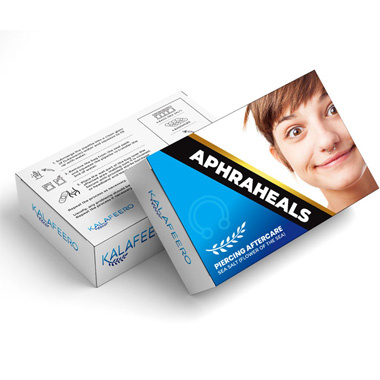
AphraHeals - Piercing Sea Salt Patch Against Inflammation
Do you spend 100 euros or more a year in our studio or online shop? Then the VIP membership is for you! As a VIP member you get access to exclusive offers and discounts, and after one year you receive a voucher worth €50,-
Sign up now via this link.