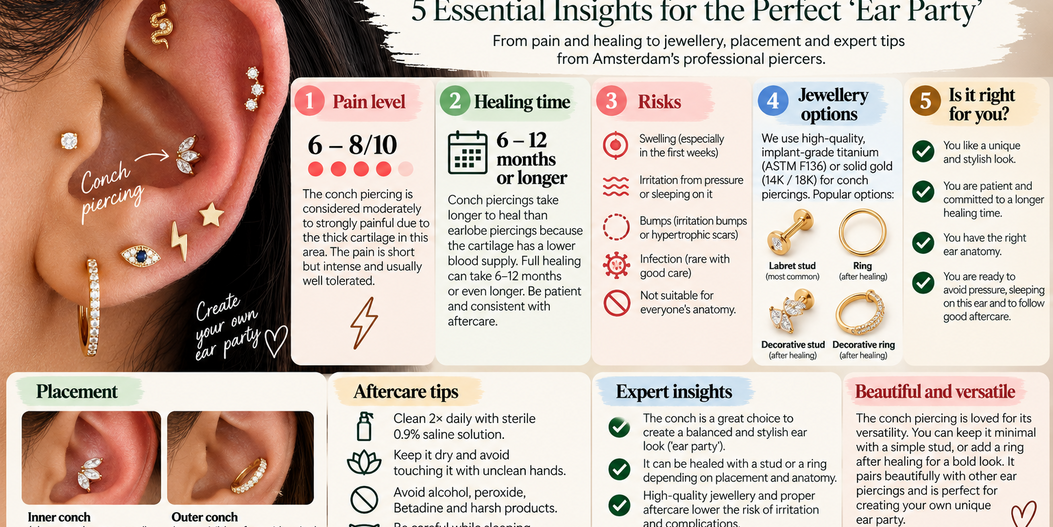

You see them everywhere: perfectly styled ears where every piece of jewellery works together. The conch piercing plays a key role in this. Whether you go minimalist or for a bold ear party, this piercing instantly adds depth and character to your look.
At Piercings Works we see every day how one well-placed conch piercing can create a complete transformation. But behind that seemingly simple upgrade lies knowledge, anatomy and timing.
1. Anatomy decides everything
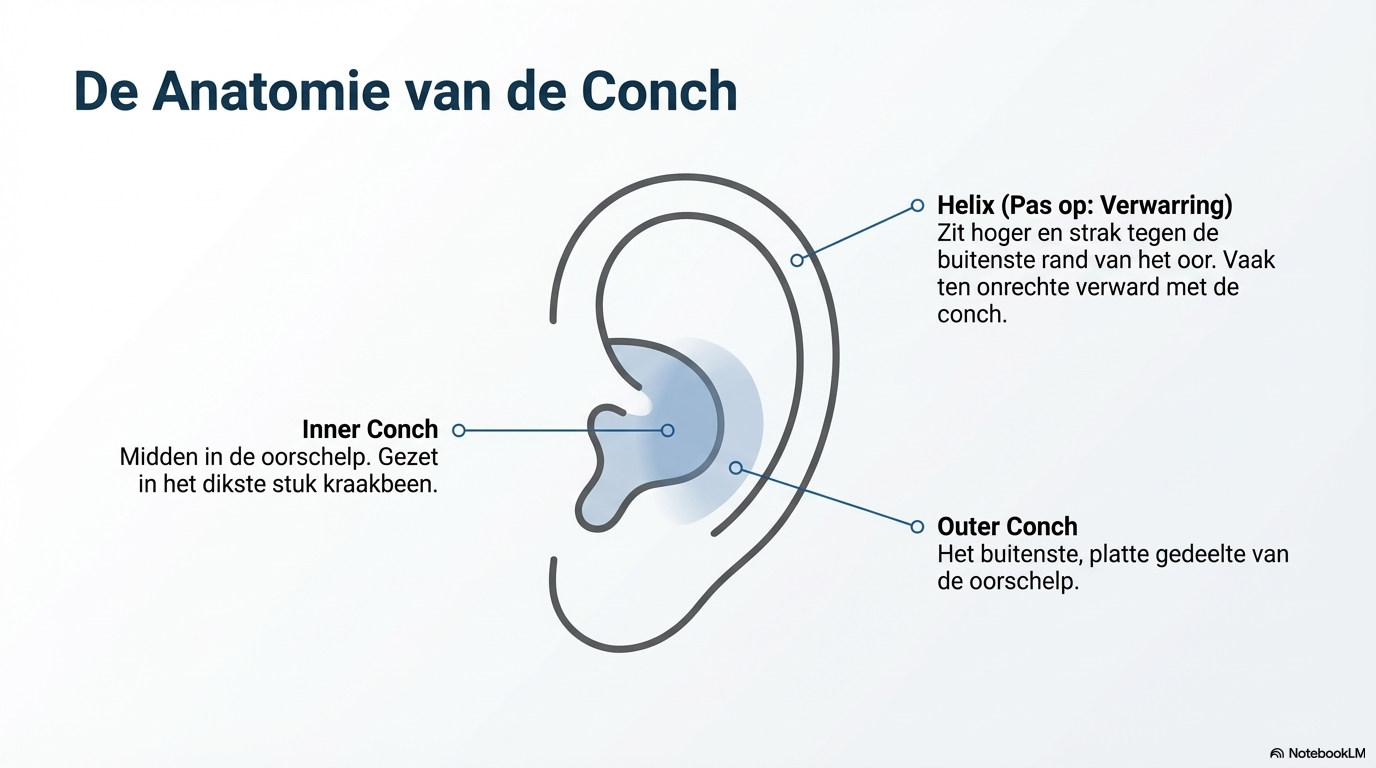
The conch piercing is placed in the middle of the ear's shell, the thickest cartilage of the ear. The name refers to the shape of a seashell – and that's no coincidence.
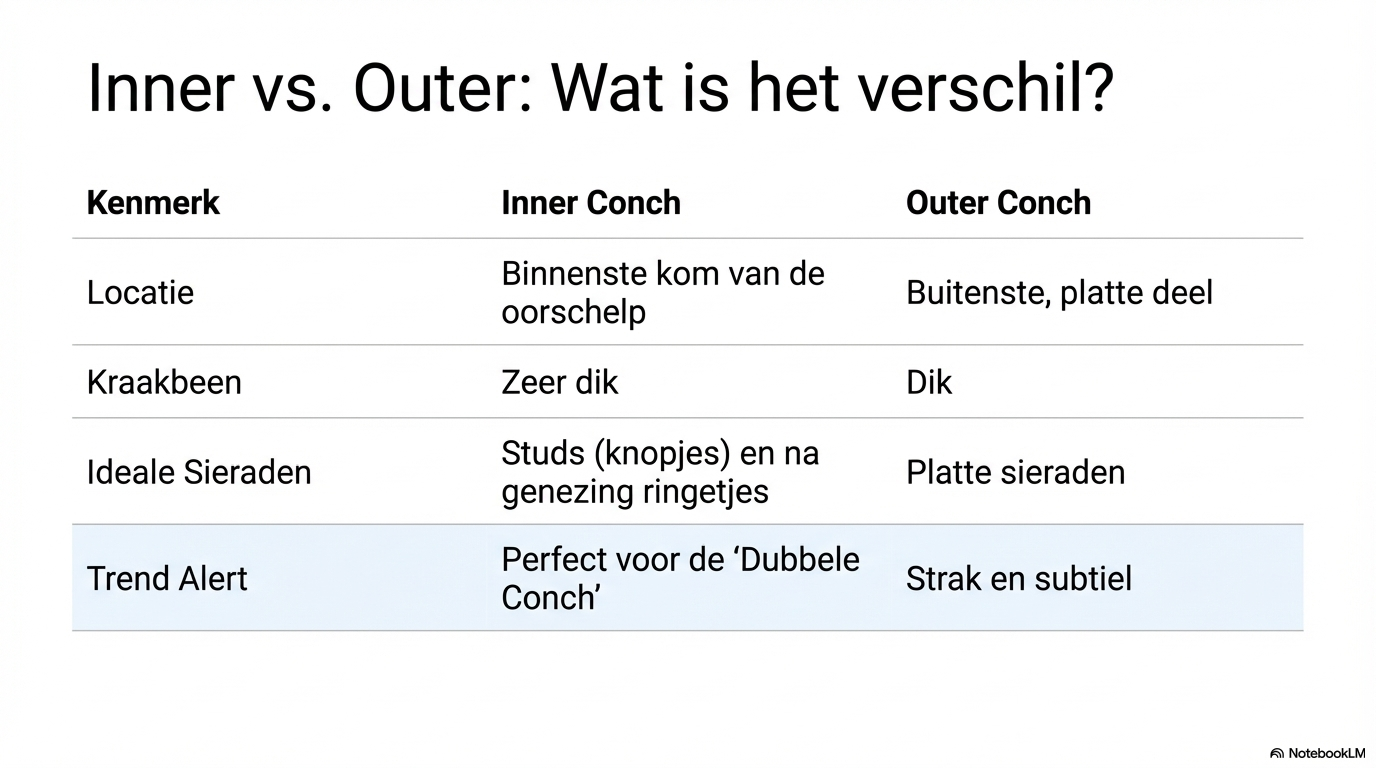
There are two variations:
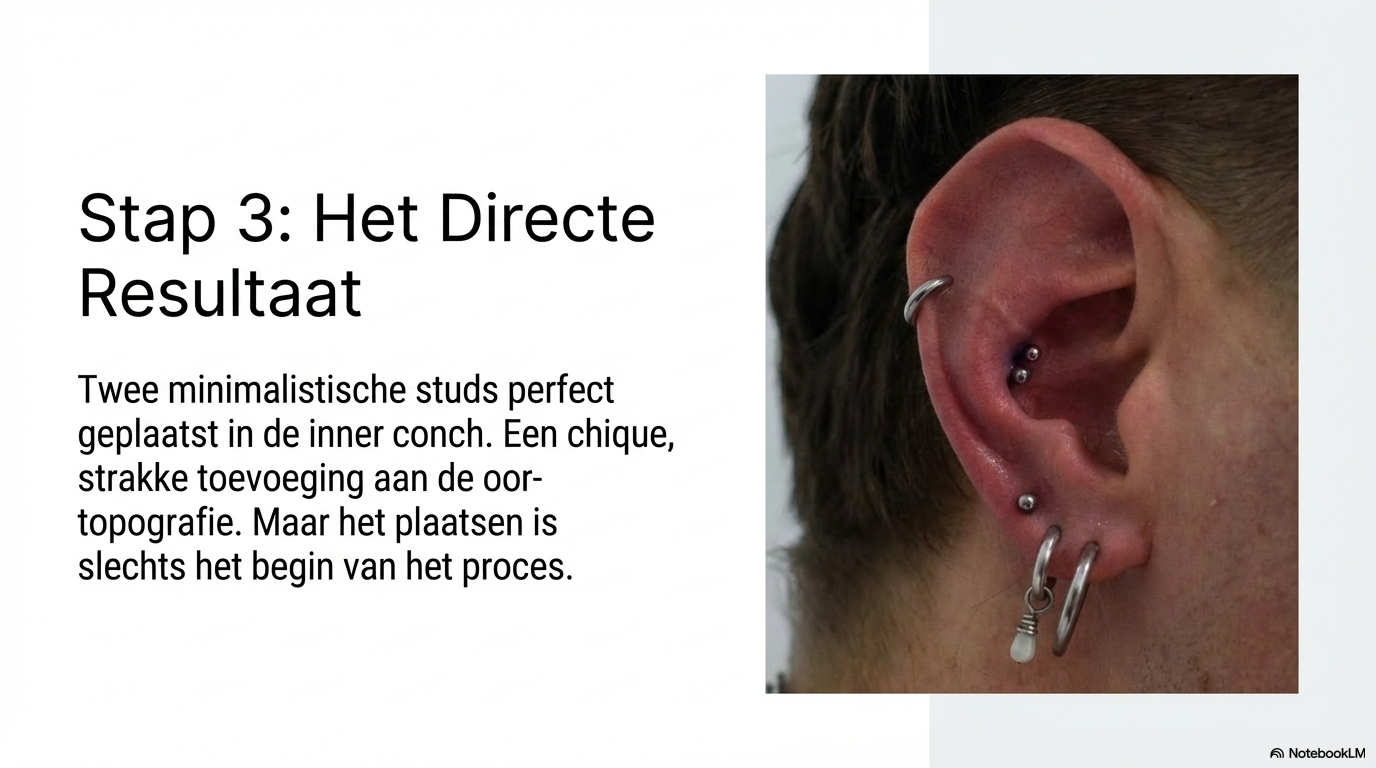
Inner conch
Placed in the deep centre of the ear. Ideal for a ring once the piercing has healed.
Outer conch
Placed on the flat outer part. Perfect for studs or labrets.
A common mistake is confusing it with the helix. The helix sits higher, on the rim of the ear, while the conch sits in the centre. The right placement determines not only the look but also how comfortable it is to wear in the long run.
2. The double conch trend: controlled impact
The double conch is currently one of the strongest trends in ear styling. Two piercings above each other create visual depth without making the ear look busy.
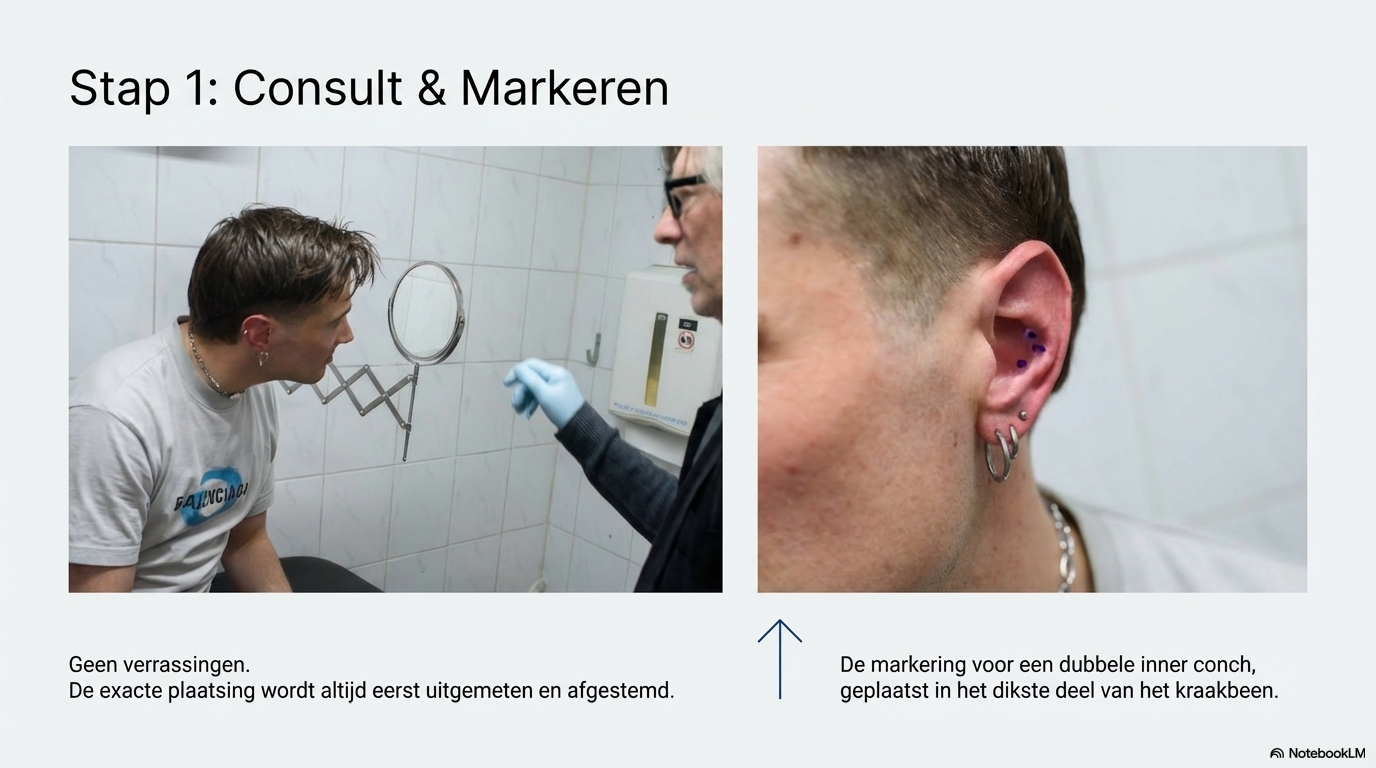
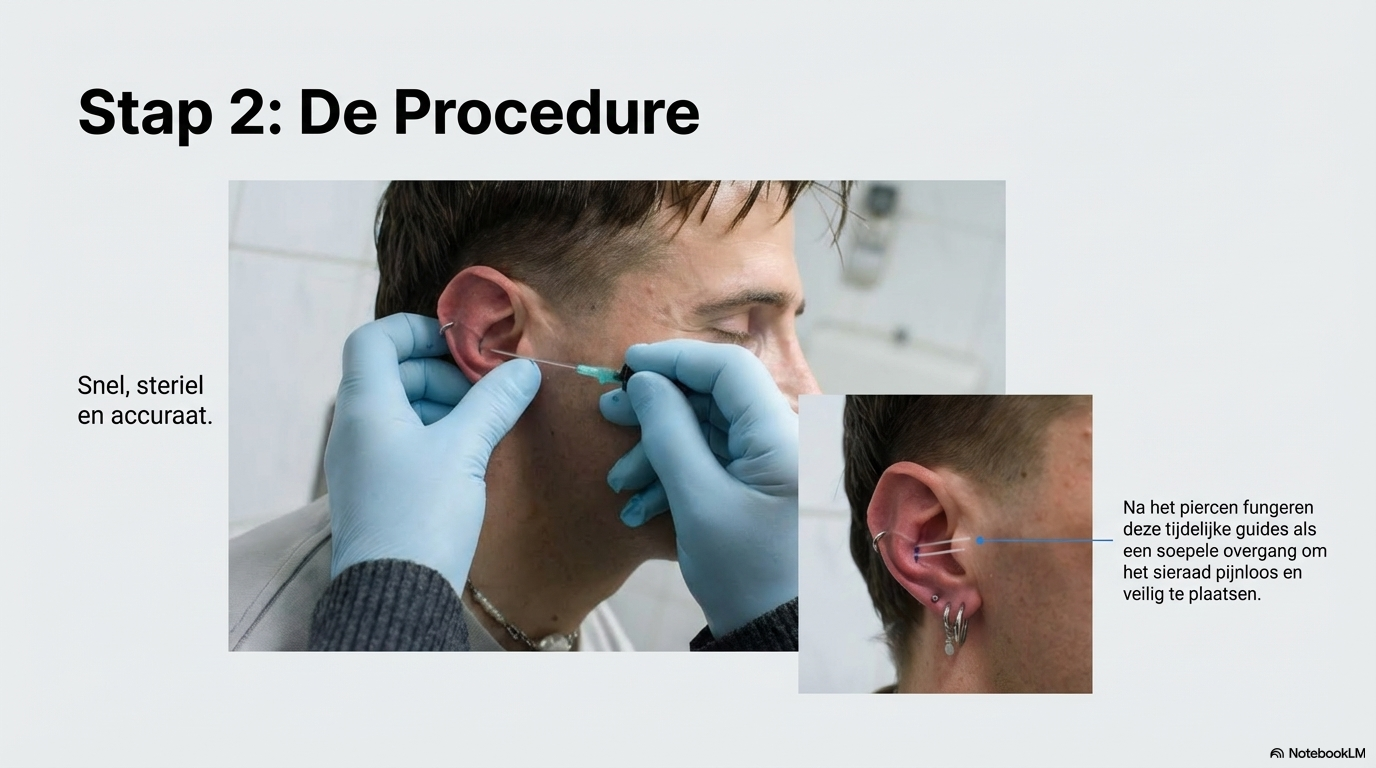
This technique takes precision. The placement has to be perfectly balanced so the piercings form one whole. In professional studios this is carefully measured before any piercing is done.
The result is a modern, layered look that is both subtle and striking.
3. Practical reality: glasses and sleeping
A conch piercing sits in a spot that's under strain every day. Two factors are often underestimated:
Glasses
The arms can press against the piercing, causing irritation. Small adjustments to the frame can solve this problem.
Sleeping position
Pressure on the piercing slows down healing. Ideally choose the ear you don't sleep on, or adjust the way you sleep for a while.
These aren't details – they're decisive factors for successful healing.
4. Healing: discipline above all
A conch piercing goes through firm cartilage and needs time to recover. Average healing time is between 6 and 9 months.
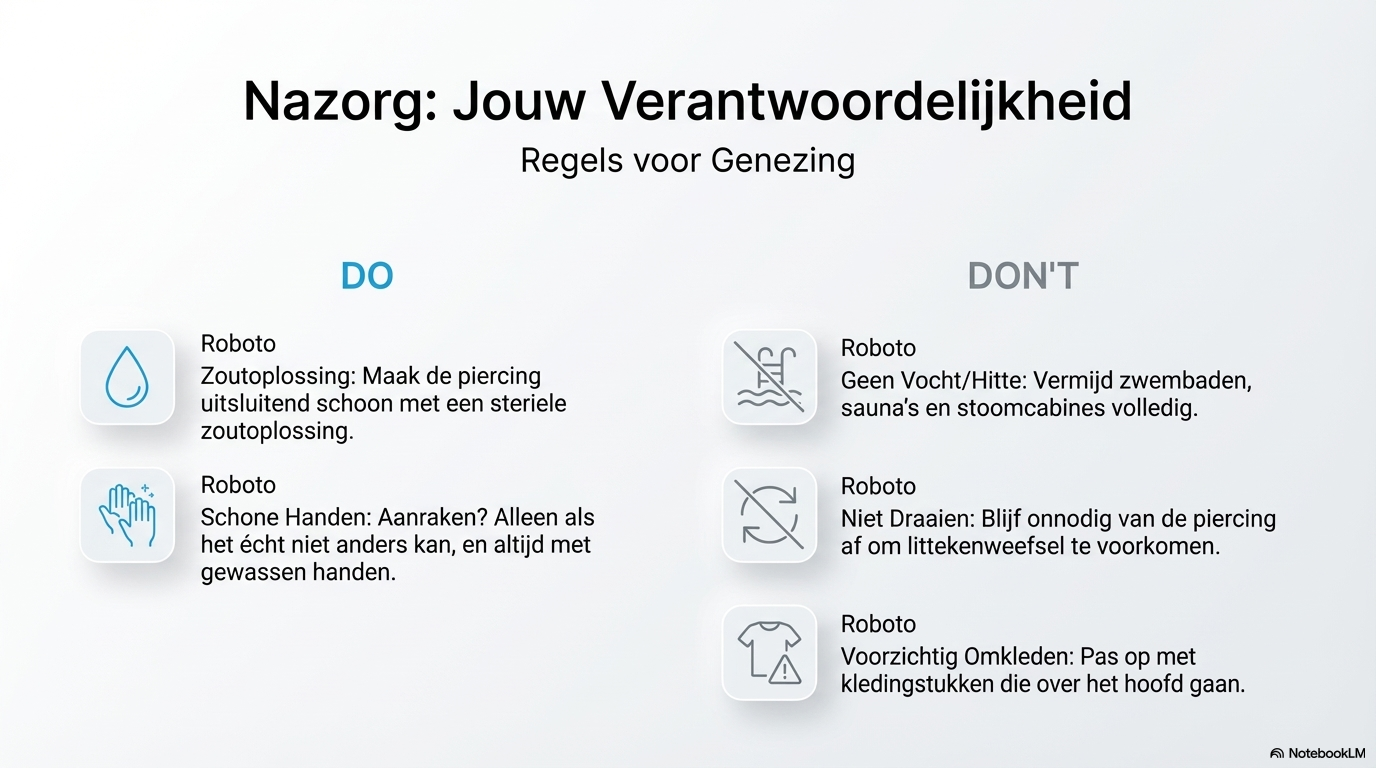
During this period there are clear guidelines:
- Clean only with a mild saline solution
- Avoid swimming pools, saunas and steam
- Touch the piercing as little as possible
- Take care with clothing and towels
Stable healing is the foundation of a beautiful, trouble-free piercing.
5. Downsizing: the forgotten key to success
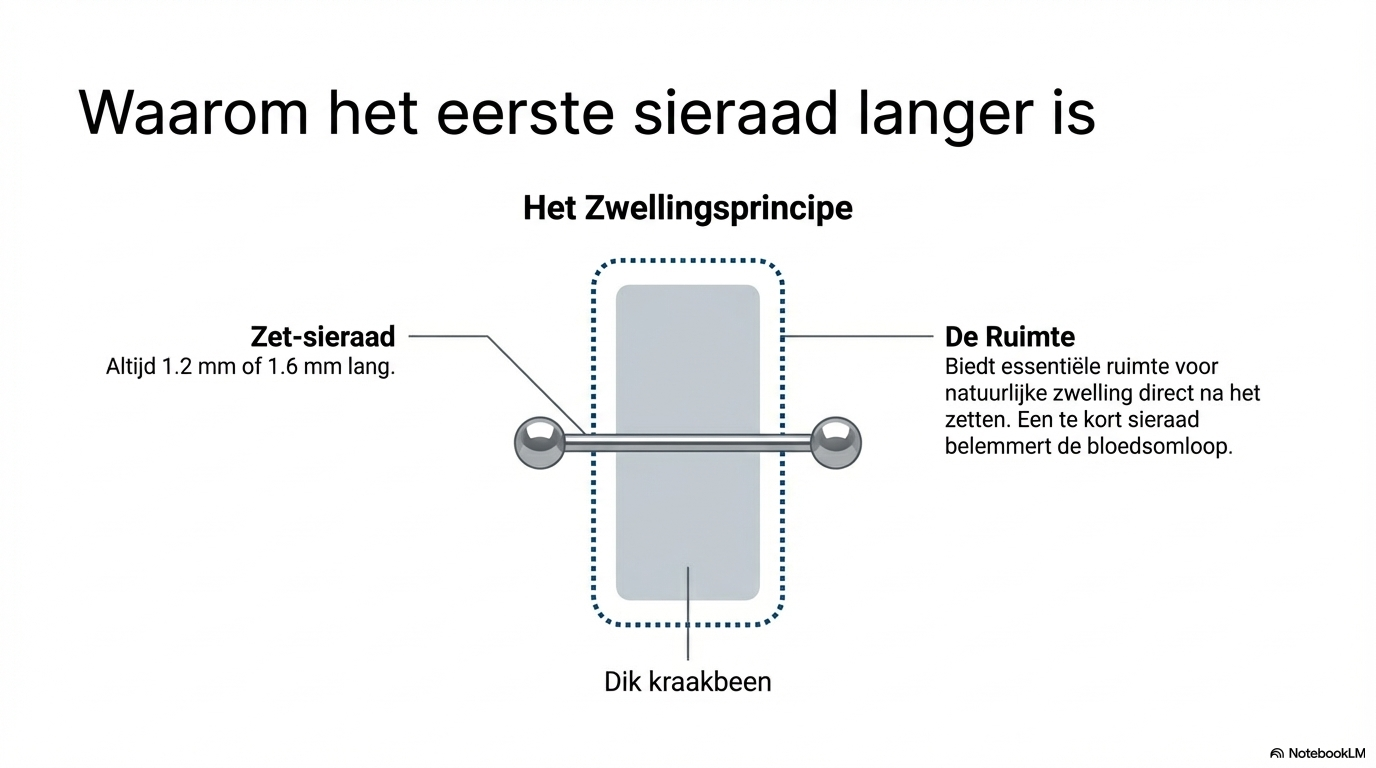
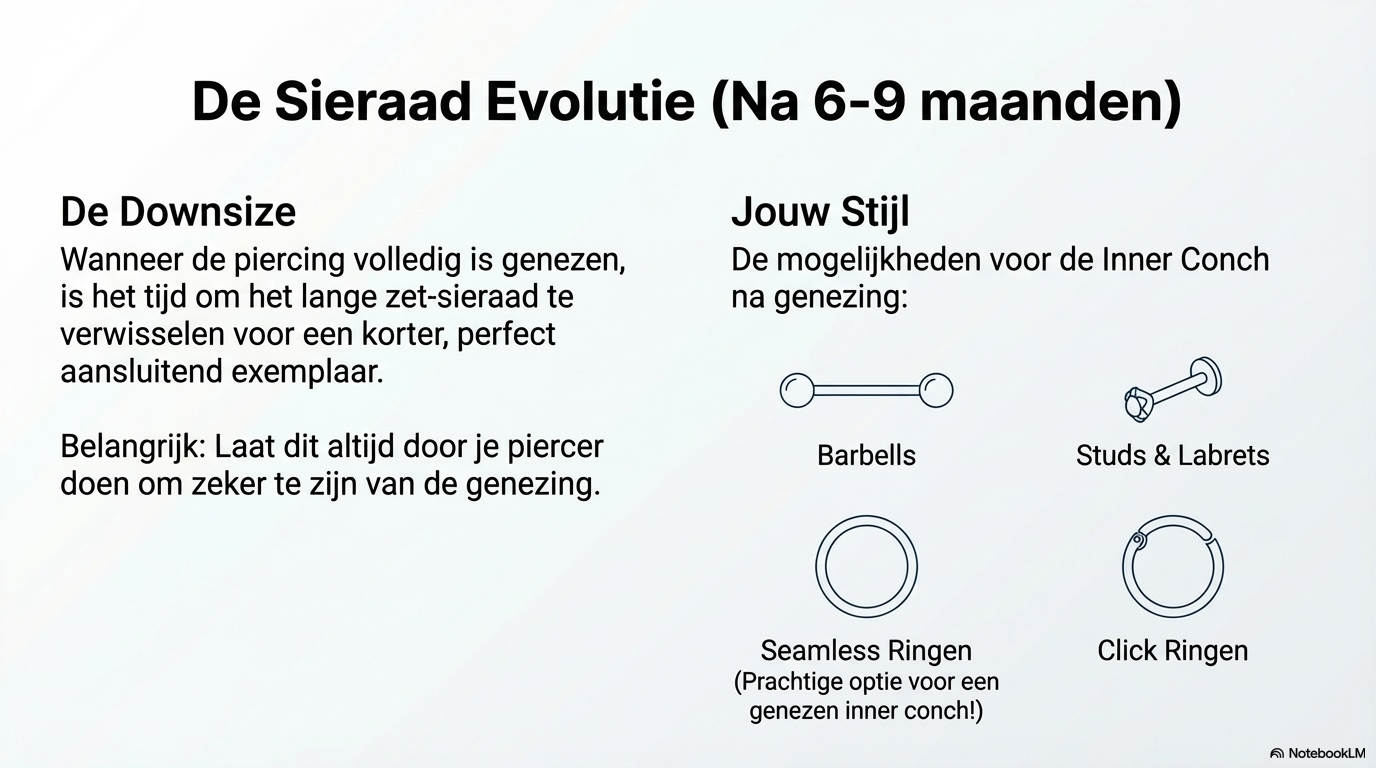
The first piece of jewellery is deliberately longer to allow for swelling. Once the swelling goes down, downsizing is essential.
Jewellery that's too long causes movement. That movement leads to irritation, bumps or even the piercing healing at an angle.
Always have this done by a professional. Adjusting the length correctly determines the final result.
From healing to styling
Once your conch has fully healed, the fun part begins: styling.
Options include:
- Minimalist studs
- Labrets with detail
- Clickers or seamless rings
- Combinations for a curated ear look
This is where your personal ear party comes to life.
Conclusion: are you ready for the conch?
The conch piercing isn't a trend that comes and goes. It's a strategic addition to your ear styling that brings both strength and elegance.
With the right placement, patience and aftercare, this piercing becomes one of the most versatile and stylish choices there is.
Want it done professionally or need advice?
Want to be sure your conch piercing is placed perfectly and heals as well as possible?
At Piercings Works, experienced specialists work with high-quality materials and maximum focus on hygiene and anatomy.
Book an appointment:
https://www.piercingzetten.com/