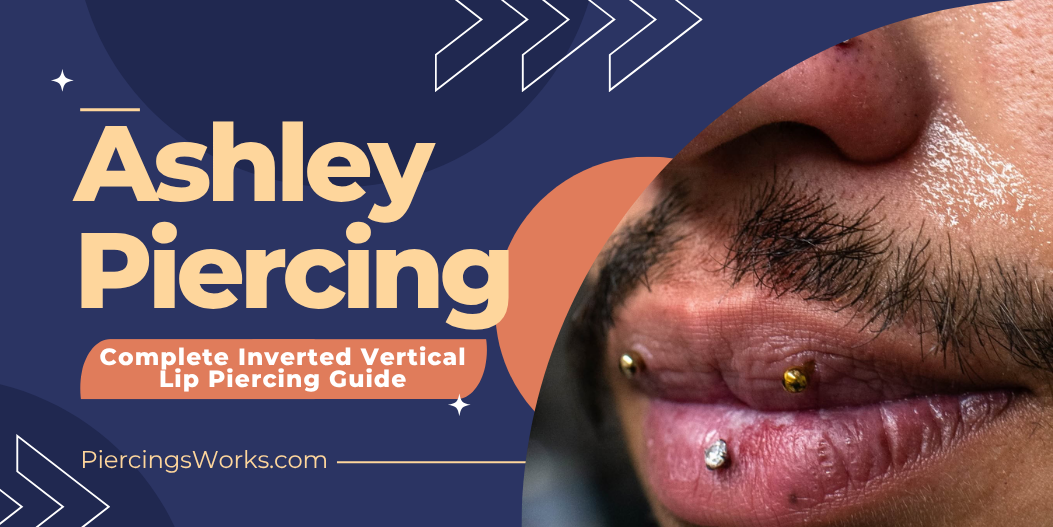

An Ashley piercing is one of the trendiest lip piercings right now – and for good reason. It’s a single visible point centered on your lower lip with a twist: the hole goes from outside to inside, making one elegant jeweled dot that catches light beautifully. If you’re dreaming of a statement lip piercing that really stands out, this is it.
What Is an Ashley Piercing?
An Ashley piercing is an inverted vertical labret – technically the needle goes straight through your lower lip, but the visible jewelry sits only on the front. The exit hole is inside your mouth, so nobody sees where it “comes out.” The result is one elegant, decorative point in the center of your lower lip. It looks minimalist but makes a strong impression – perfect if you want something subtle yet striking.
Anatomy and Suitability
Ashley piercings are highly anatomy-dependent. The thickness of your lip, your lip shape, and your gum line position all determine whether this works for you. Some lips are too thin; some have gum issues that make it risky. This is why we do a thorough anatomical check at Piercings Works – your lip needs to be thick enough and your gums need to be in the right place. If it’s not suitable, we’ll tell you honestly.
Pain and Swelling
Ashley piercings feel sharp when they go through – like any lip piercing. But the swelling is probably the most noticeable part. In the first week, your lower lip can be seriously swollen; some people say it feels like they bit their lip hard. This is normal and will pass.
Healing time is 12–16 weeks, which is longer than many other lip piercings. That’s because you use your lip constantly – eating, talking, smiling – all of it slows healing.
Pain relief and comfort: - Cold helps: ice water and popsicles are your friends - Soft food the first week (yogurt, soups, applesauce) - Avoid hot drinks that worsen swelling - Sleep with your head elevated the first few nights – it limits swelling
Healing and Aftercare Timeline
Weeks 1–2 (acute swelling): - Rinse after every meal with salt water (no soapy mouthwash) - Soft food, cold water only - No smoking, alcohol, or drugs – all worsen swelling - No makeup or lip products
Weeks 3–6 (swelling decreases): - Downsize to a shorter bar once swelling subsides (your piercer advises) - Regular rinsing stays important - Slowly return to normal food - Still no lipstick or gloss
Weeks 6–16 (further healing): - Keep it clean regularly - Stay gentle – it looks healed but isn’t fully stable yet - Your piercer will tell you when you’re fully healed
Risks: The Critical Maintenance
Ashley piercings carry higher risks than you might think. The most critical risk is tooth and gum contact. Because the piercing goes deep through your lip and your lower lip is always moving, it can rub against your teeth or gums, especially if:
- Your bar isn’t placed correctly
- You don’t downsize once swelling decreases
- You neglect the piercing during healing
Lip balm, toothpaste, and lipstick can also cause irritation – avoid these completely during healing.
Swelling is intense in week 1; increasingly worse swelling after day 3 isn’t normal and needs attention.
Jewelry and Materials
For Ashley piercings, you use a labret or curved barbell with one visible decorative end. Standard gauge is 1.2 mm. You start with a longer bar (usually 10–12 mm) for swelling room. After 3–4 weeks, when swelling decreases, you downsize to a shorter bar (7–8 mm).
Material must be implant-grade titanium – no cheap alloys. After it’s fully healed, you can try gold, silver, or custom designs, as long as it’s at least 14k if you choose gold.
The Criticality of Downsizing
This cannot be overstated: downsizing is CRITICAL for Ashley piercings. Waiting too long to downsize can cause tooth problems. Your piercer will tell you when you’re ready – usually around week 3–4 – and you need to listen. A bar that’s too long after swelling is a recipe for tooth damage.
Visit Piercings Works
Address: Reguliersbreestraat 46, Amsterdam (just around the corner from Rembrandtplein)
Hours: Daily 10:30–22:00 (walk-ins welcome)
We use implant-grade titanium, sterile single-use materials, and our piercers have been working since 1998. Before we pierce you, we do a thorough anatomical check – your health comes first.
Book an appointment or drop by. Our piercers will be honest about whether your anatomy is suitable.
Frequently Asked Questions
How much does an Ashley piercing hurt?
The actual pierce is sharp – you feel it for one second. The real challenge is the swelling in the first week, not so much pain.
Can I eat and drink normally during healing?
Not right away. Soft food and cold water are essential the first week. After 2–3 weeks you can slowly return to normal eating, but be careful with heat.
What happens if I don’t downsize?
Your bar will rub against your teeth, which can cause cavities or enamel erosion. This is why your piercer will tell you when to downsize – and you need to listen.
How much swelling is normal?
Significant swelling in the first 3–5 days is normal. Your lip can feel puffy. But worsening swelling after day 3 is a sign something’s wrong – contact your piercer.
Can I wear makeup around my Ashley piercing?
Not during healing. Lipstick, lip gloss, and even moisturizers can cause irritation. Wait until you’re fully healed (12–16 weeks) before you carefully return to lip products.
How long until it feels healed?
12–16 weeks, but it might still feel tender after that. Fully stable and ready for gentle jewelry experimentation is usually around 4 months.
Ashley piercings are trendy, elegant, and truly striking when placed well. The key is honest anatomical assessment, following aftercare carefully, and especially: downsize on time.